Quotessence
Home / Quotes / Quote by Misha Glenny

Quote by Misha Glenny

“The attack on the law firms and attacks like that are industrial espionage, searching for copyrighted materials to lift and so on; it's not quite the same as cyber-warfare. They are regarded as related. The Chinese are trying to steal an economic march on the West, which is a consequence of the fact that we outsourced all of our manufacturing to China in the 1990s.”

Quote by Misha Glenny

Author
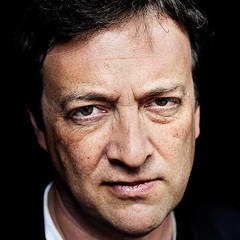
Misha Glenny
Misha Glenny

Misha Glenny is a British journalist renowned for his in-depth reporting on Eastern Europe and Russia. Born in 1958, he has been focusing on the political, economic, and social changes in the region since the early 1980s. more

You May Also Like

“The U.S. has the most advanced cyber-weaponry on the planet, and t if you look at the U.S. from the perspective of the Chinese People's Liberation Army, which runs most of its cyber activities, they look at you and they see Google and Facebook - the two largest depositories of personal data in the world - and they see the reach of the National Security Agency, which has huge digital capacity to know what is going on around the world. So the Chinese would see cyber as an un-level playing field, because the U.S. holds all sorts of advantages.”

“The anonymity issue is a big question. As long as people can disguise cyber attacks and as long as there is a sort of question mark over who is responsible, then the problem will continue to exist. And of course what happens in response to that is that there is a move to try and refashion the Internet so that anonymity is impossible, which of course leads to fears among all sorts of groups - civil rights groups, NGOs, and political parties - that the Internet is going to be used simply as a method of control. So these are very sensitive issues.”

“It's great that the Internet can enhance and speed up our communications and that computers can do all the things they do. It's fabulous. At the same time, it changes our priorities. For example, before I would always remember people's telephone numbers and now I don't know anyone's number. So what happens if computer systems go down but you still have landlines? Well, I couldn't call anyone because I don't know anyone's number.”

“The Internet obviously changes things; we've seen that in the music industry above all else. As an author, I'm now having to deal with the fact that it's happening in the publishing industry as well. And publishing is going through a very difficult time. Some view it as positive, some negative, but nobody really knows how to deal with it. If you're an author it looks very challenging because your work can be pirated so easily and there's very little you can do about it.”

“When you're researching things that have happened, the clear narrative arc is not there already. This is the problem of writing nonfiction for me - writing nonfiction which is about serious subjects and has serious political and social points to make, yet which is meant to be popular to a degree - what happens when the facts don't fit a convenient narrative arc? I guess that for a lot of nonfiction writers that is a central challenge.”

“What has happened is that we have seen a shift in the past twenty years in the very concept of hacking. So hacking twenty years ago was a neutral, positive concept. Somebody who was a hacker was someone with advanced computer skills, which could expose vulnerabilities and could explain why systems worked well or worked badly and they were generally regarded as an asset. Over the past twenty years, a combination of media and law enforcement has changed the perception of the concept so that it has almost always, if not invariably, a pejorative sense attached.”