Quotessence
Home / Quotes / Quote by Terry Goodkind

Quote by Terry Goodkind

“many people must be ruled to thrive. In their selfishness and greed, they see free people as their oppressors. They wish to have a leader who will cut the taller plants so the sun will reach them. They think no plant should be allowed to grow taller than the shortest, and in that way give light to all. They would rather be provided a guiding light, regardless of the fuel, than light a candle themselves.”

Quote by Terry Goodkind

Work

Wizard's First Rule

This novel is the first in a series and follows a young man's transformation from a simple farm boy into a powerful wizard, as he discovers his destiny and faces various challenges in a magical world. more

Author

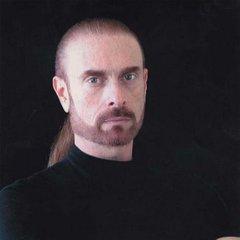
Terry Goodkind
Terry Goodkind

Terry Goodkind, born in 1948, is an American author known for his fantasy literature, particularly for his 'The Sword of Truth' series. His works are characterized by their profound philosophical thoughts and rich imagination, which have won him a large following among readers. more

You May Also Like

“Sarah took a deep breath and set off along the passageway again. A clump of lichen on the gatepost opened its eyes and watched her go. The eyes, on tendrils, had an anxious look, and when she had gone some distance away the clump, swiveling its eyes toward each other, commenced to gossip among itself. Most of it disapproved of the direction she had taken. You could tell that from the way the eyes looked meaningfully into each other. Lichen knows about directions.”

“An isolated person requires correspondence as a means of seeing his ideas as others see them, and thus guarding against the dogmatisms and extravagances of solitary and uncorrected speculation. No man can learn to reason and appraise from a mere perusal of the writing of others. If he live not in the world, where he can observe the public at first hand and be directed toward solid reality by the force of conversation and spoken debate, then he must sharpen his discrimination and regulate his perceptive balance by an equivalent exchange of ideas in epistolary form.”