“All the lot. Their spunk is gone dead. Motor-cars and cinemas and aeroplanes suck that last bit out of them. I tell you, every generation breeds a more rabbity generation, with India rubber tubing for guts and tin legs and tin faces. Tin people! It’s all a steady sort of bolshevism just killing off the human thing, and worshipping the mechanical thing. Money, money, money! All the modern lot get their real kick out of killing the old human feeling out of man, making mincemeat of the old Adam and the old Eve. They’re all alike. The world is all alike: kill off the human reality, a quid for every foreskin, two quid for each pair of balls. What is cunt but machine-fucking! — It’s all alike. Pay ’em money to cut off the world’s cock. Pay money, money, money to them that will take spunk out of mankind, and leave ’em all little twiddling machines.”
Quote by D. H. Lawrence
Work
Lady Chatterley's Lover
Published in 1928, the novel is known for its explicit sexual content and its exploration of the relationship between a working-class woman and her aristocratic husband. more
Author
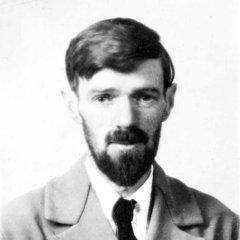
D. H. Lawrence
D. H. Lawrence was an English novelist and poet, born on September 11, 1885, and died on March 2, 1930. He is recognized for his distinctive prose style and his exploration of complex human relationships, particularly in the context of modernity and industrialization. His works often deal with themes of love, sex, and the struggle for individuality. more
You May Also Like
Source: Being Bold: Quotes, Poetry, & Motivations for Every Day of the Year
Source: The Ragazzi
“Personally, I do not believe the human mind has any limits but those we impose ourselves.”
Source: Education of a Wandering Man: A Memoir
“It means that the things that make us human often make us ill.”
Source: Eve's Apple
Source: Nothing is here...
Source: THE ART OF LOVING
Source: This Is Why They Hate Us
Source: The Givenness of Things: Essays
Source: All the King's Men