Quotessence
Home / Quotes / Quote by Ned Rorem

Quote by Ned Rorem

Work

The Paris Diary & The New York Diary: 1951–1961

This volume collects two personal diaries from the 1950s and early 1960s, offering a firsthand account of the author's life in two major cultural capitals. The Paris Diary records observations of expatriate life, artistic circles, and daily routines in post-war Paris, while the New York Diary shifts to the American literary and social scene of the same period. Together, they provide a candid, introspective look at the author's creative process, relationships, and the evolving cultural landscapes of both cities. more

Author
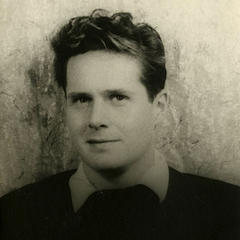
Ned Rorem
Ned Rorem

Ned Rorem is an American composer born on October 23, 1923. His unique musical style, blending classical and modern elements, has had a significant impact on the development of American music. more

You May Also Like

“Smith, as we have said, was not the proponent of any one class. He was a slave to his system. His whole economic philosophy stemmed from his unquestioning faith in the ability of the market to guide the system to its point of highest return. The market — that wonderful social machine — would take care of society's needs if it was left alone. "Consumption is the sole end and purpose of all production," he wrote.”

“It had been held that the economic system, any capitalist system, found its equilibrium at full employment. Left to itself, it was thus that it came to rest. Idle men and idle plant were an aberration, a wholly temporary failing. Keynes showed that the modern economy could as well find its equilibrium with continuing, serious unemployment. Its perfectly normal tendency was to what economists have since come to call an underemployment equilibrium.”

“In Europe and the United States the two decades following the Second World War will for long be remembered as a very good time, the time when capitalism really worked. Everywhere in the industrialized countries production increased. Unemployment was everywhere low. Prices were nearly stable. When production lagged and unemployment rose, governments intervened to take up the slack, as Keynes had urged.”