Quotessence
Home / Quotes / Quote by John Stuart Mill

Quote by John Stuart Mill

“There is a limit to the legitimate interference of collective opinion with individual independence: and to find that limit, and maintain it against encroachment, is as indispensable to a good condition of human affairs, as protection against political despotism.”

Quote by John Stuart Mill

Work

On Liberty

John Stuart Mill's seminal work delves into the principles of liberty, examining the boundaries between individual rights and societal control, and advocating for the protection of personal autonomy in a democratic society. more

Author

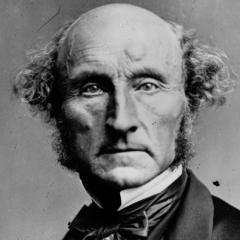
John Stuart Mill
John Stuart Mill

John Stuart Mill was an influential British philosopher, economist, and logician. He is one of the most important figures in 19th-century philosophy and his ideas had a profound impact on political, social, and philosophical thought of the time. more

You May Also Like

“If it were felt that the free development of individuality is one of the leading essentials of well-being; that it is not only a coordinate element with all that is designated by the terms civilisation, instruction, education, culture, but is itself a necessary part and condition of all those things; there would be no danger that liberty should be undervalued.”

“What a country wants to make it richer is never consumption, but production. Where there is the latter, we may be sure that there is no want of the former. To produce, implies that the producer de_sires to consume; why else should he give himself useless labor? He may not wish to consume what he himself produces, but his motive for producing and selling is the desire to buy. Therefore, if the producers generally produce and sell more and more, they certainly also buy more and more.”

“The opening of a foreign trade, by making them acquainted with new objects, or tempting them by the easier acquisition of things which they had not previously thought attainable, sometimes works a sort of industrial revolution in a country whose resources were previously undeveloped for want of energy and ambition in the people: inducing those who were satisfied with scanty comforts and little work, to work harder for the gratification of their new tastes, and even to save, and accumulate capital, for the still more complete satisfaction of those tastes at a future time.”