Quotessence
Home / Quotes / Quote by Michael Chabon

Quote by Michael Chabon

Work

Telegraph Avenue

Telegraph Avenue is a richly detailed novel that delves into the lives of a group of friends living in the vibrant and diverse neighborhood of Telegraph Avenue in the San Francisco Bay Area. The story is centered around the struggles of a struggling record store owner and his relationship with his daughter, as well as the impact of gentrification on the community. The novel is known for its engaging characters, insightful commentary on the music industry, and its portrayal of the complexities of family and friendship. more
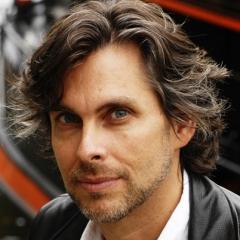
Author

Michael Chabon
Michael Chabon

Michael Chabon is an American author known for his rich imagination and unique narrative style. His works span various literary genres, including novels, short story collections, and children's literature. Chabon's notable works include 'The Amazing Adventures of Kavalier & Clay', 'The Yiddish Policemen's Union', and 'The Mysteries of Pittsburgh', which have won him widespread acclaim and numerous literary awards. more

You May Also Like

“It is very easy to grow tired at collecting; the period of a low tide is about all men can endure. At first the rocks are bright and every moving animal makes his mark on the attention. The picture is wide and colored and beautiful. But after an hour and a half the attention centers weary, the color fades, and the field is likely to narrow to an individual animal. Here one may observe his own world narrowed down until interest and, with it, observation, flicker and go out. And what if with age this weariness becomes permanent and observation dim out and not recover? Can this be what happens to so many men of science? Enthusiasm, interest, sharpness, dulled with a weariness until finally they retire into easy didacticism? With this weariness, this stultification of attention centers, perhaps there comes the pained and sad memory of what the old excitement was like, and regret might turn to envy of the men who still have it. Then out of the shell of didacticism, such a used-up man might attack the unwearied, and he would have in his hands proper weapons of attack. It does seem certain that to a wearied man an error in a mass of correct data wipes out all the correctness and is a focus for attack; whereas the unwearied man, in his energy and receptivity, might consider the little dross of error a by-product of his effort. These two may balance and produce a purer thing than either in the end. These two may be the stresses which hold up the structure, but it is a sad thing to see the interest in interested men thin out and weaken and die. We have known so many professors who once carried their listeners high on their single enthusiasm, and have seen these same men finally settle back comfortably into lectures prepared years before and never vary them again. Perhaps this is the same narrowing we observe in relation to ourselves and the tide pool—a man looking at reality brings his own limitations to the world. If he has strength and energy of mind the tide pool stretches both ways, digs back to electrons and leaps space into the universe and fights out of the moment into non-conceptual time. Then ecology has a synonym which is ALL.”