Quotessence
Home / Quotes / Quote by Austin Farrer

Quote by Austin Farrer

“The crucial revelatory images that express 'the thought of Christ' are present in scripture and reinforced in worship.”

Quote by Austin Farrer

Author
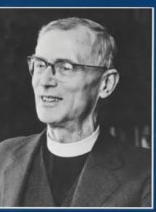
Austin Farrer
Austin Farrer

Austin Farrer was an influential philosopher and theologian in the 20th century. His work encompassed fields such as religious philosophy, epistemology, and metaphysics, and is notable for its unique perspective and reexamination of traditional philosophical questions. more

You May Also Like

“Perhaps art can help us to look beyond the immediate beauty with all its puzzles, and to glimpse that new creation which makes sense not only of beauty but of the world as a whole, and ourselves within it ... The artist can then join forces with those who work for justice and those who struggle for redemptive relationships, and together encourage and sustain those who are reaching out for a genuine, redemptive spirituality.”

“Disguise is central to God's way of dealing with us human beings. Not because God is playing games with us but because the God who is beyond our knowing makes himself known in the disguise of what we can know. The Christian word for this is revelation, and the ultimate revelation came by incarnation. ... God is the master of disguises, in order that we might see.”

“The chief difficulty is that God demands of us that we live by faith: faith in God, God's sovereignty over the future, God's sufficiency for the present; while, on the other hand, the various other gods whom we can serve appeal to us in terms of the things which we can see and the forces which we can calculate. The choice between the life of faith and the life of sight is a choice between a God whom only faith can apprehend and gods whom one has only to see to understand.”

“In this same tradition, beauty is inextricably bound up with the principles of order and harmony believed to underlie the cosmos. Artists in the Classical tradition, inspired by Platonic idealism, strove to create images that represented not the world of particulars-with all its defects-but an ideal image conceived in the mind, which was taken as representing some absolute, pure, ideal form of which all particular, material forms are but a mere shadow.”