“A country is strong which consists of wealthy families, every member of whom is interested in defending a common treasure; it is weak when composed of scattered individuals, to whom it matters little whether they obey seven or one, a Russian or a Corsican, so long as each keeps his own plot of land, blind in their wretched egotism, to the fact that the day is coming when this too will be torn from them.”
Quote by Honore de Balzac
Work
Letters of Two Brides
This book presents a series of letters exchanged between two women preparing for marriage, offering insights into the emotions and experiences surrounding the institution of marriage during the time period in which the letters were written. more
Author
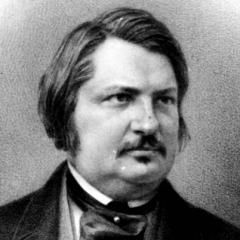
Honore de Balzac
French novelist born on May 20, 1799, and died on August 18, 1850. Honore de Balzac is renowned for his profound insight and criticism of 19th-century French society, hailed as the 'father of modern fiction'. more
You May Also Like
Source: A Woman at Thirty
“Women, perhaps even require a little hypocrisy.”
Source: The Magic Skin: Or The Wild Ass's Skin
“Virtue in women is perhaps a question of temperament.”
Source: Analytical Studies: Physiology of Marriage and Petty Troubles of Married Life
“The passion of love is essentially selfish, while motherhood widens the circle of our feelings.”
Source: The Magic Skin: Or The Wild Ass's Skin
Source: The Magic Skin: Or The Wild Ass's Skin