“Socrates said, our only knowledge was "To know that nothing could be known;" a pleasant Science enough, which levels to an ass Each Man of Wisdom, future, past, or present. Newton, (that Proverb of the Mind,) alas! Declared, with all his grand discoveries recent, That he himself felt only "like a youth Picking up shells by the great Ocean-Truth."”
Quote by Lord Byron
Work
Delphi Complete Works of Lord Byron (Illustrated)
The book features an extensive compilation of Lord Byron's poetry, plays, and prose, showcasing his diverse literary talent. Each piece is accompanied by detailed illustrations that enhance the reader's experience. This illustrated edition is a valuable resource for students, scholars, and enthusiasts of Lord Byron's work. more
Author
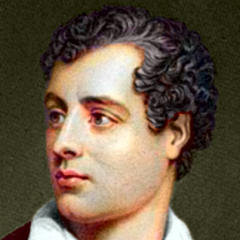
Lord Byron
Lord Byron, born on January 22, 1788, and died on April 19, 1824, was a prominent English Romantic poet. His poetry is characterized by its strong personality and passion, and has had a profound impact on literature. more
You May Also Like
“The ocean ... like the air, is the common birth-right of mankind.”
Source: The Physical Geography of the Sea
Source: The Life and Genius of Anton Chekhov: Letters, Diary, Reminiscences and Biography: Assorted Collection of Autobiographical Writings of the Renowned Russian Author and Playwright of Uncle Vanya, The Cherry Orchard, The Three Sisters and The Seagull
“Faith is knowing there is an ocean because you have seen a brook.”
Source: Thoughts of a Christian Optimist: The Words of William Arthur Ward