Quotessence
Home / Quotes / Quote by Maggie O'Farrell

Quote by Maggie O'Farrell

Author

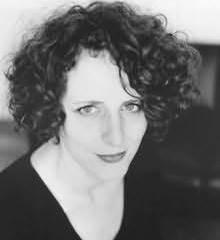
Maggie O'Farrell
Maggie O'Farrell

Maggie O'Farrell is an Irish author born in 1972. Her works are known for their deep character development and emotionally rich storytelling. O'Farrell's writing often focuses on family relationships and women's experiences, frequently exploring themes of love, marriage, and identity. more

You May Also Like

“While I was writing the book, one of my children was diagnosed with dyslexia. Dyslexia is a very tiny word for a wide-ranging neurological condition that affects different people in different ways. But I was reading an awful lot about it, to try and find ways of helping my child. I think a lot of fiction comes from this desire to confront unanswerable questions, and it's heartbreaking to see your child, a bright child, struggling so much with something that others are finding so easy. It's such an assault to the child's self-esteem and, as a mother, it's hard to watch.”

“All the time I was plowing through books on dyslexia, I found myself asking: what if, what if? What if you were a kid the 1950s with this condition, when there were no books on it, when there was no understanding of it. I remember kids in my class at school who just didn't seem to progress in their reading. There was no extra help. People just thought, "Oh, he or she isn't so bright, or they're obstinate."”

“I found it was my good fortune to somehow be able to work in these forms that I loved when I was a kid. I love movies and I could write screenplays. I love theater and I could write plays. I mean, they would be my own, I could never write what was used to be called the well-made play. But my first play, "Little Murders," turned out to be a great success and a great influence on plays at that time.”

“I've had enormous luck and enormous pleasure in working in such forms as movies and plays that I loved when I was a kid and I just - because I could always write dialogue, because I always had a sense of how people spoke. And because I had a strong narrative sense; growing up and loving stories, loving novels, I just seem to know how to tell a story and I read a lot, I went to a lot of movies, I went to a lot of plays, and it rubbed off on me. And that's all. It just rubbed off on me.”

“Something that had an enormous influence over my relationship with language was my stammer. I had a really bad stammer in my childhood and adolescence, and that imbues you with two things. First, a hyper-sensitivity to grammar, because a stammerer will have problematic sounds, impossible verbal stumbling blocks. Second, writing is just such a joy when you have a problem with speaking. It's so astonishing to watch language coming out of your pen without any hesitation or dysfluency.”

“I still have a stammer. I hate it; I loathe and despise it. But it's always there, and I have lots of ways to conceal it. I can conceal it now but I'm not good on the telephone. I get my husband to make dentist appointments. And I hate live radio. Hate it. I really try to avoid it at all costs. But it's always there. Stammerers become skilled at sentence construction and synonyms: we have to be. Faced with a problem word, we need to have instant access to eight others we could use instead - ones we could say without stumbling. I think my stammer is a huge part of my being a writer.”