Quotessence
Home / Quotes / Quote by Thomas Hobbes

Quote by Thomas Hobbes

“For WAR, consisteth not in Battle only, or the act of fighting; but in a tract of time, wherein the Will to content by Battle is sufficiently known.... So the nature of War, consisteth not in actual fighting; but in the known disposition thereto, during all the time there is no assurance to the contrary. All other time is PEACE.”

Quote by Thomas Hobbes

Author
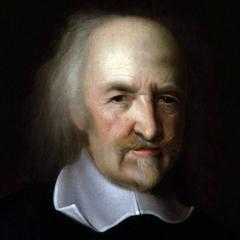
Thomas Hobbes
Thomas Hobbes

Thomas Hobbes, a British philosopher, politician, historian, economist, and writer, was born on April 5, 1588, in Wiltshire, and died on December 4, 1679, in Oxford, England. Hobbes is considered one of the most important philosophers of the 17th century, known for his profound analysis of the state, society, and human behavior. more

You May Also Like

“And I profess still, that whatsoever the church of England (the church, I say, not every doctor) shall forbid me to say in matterof faith, I shall abstain from saying it, excepting this point, that Jesus Christ, the Son of God, died for my sins. As for other doctrines, I think it unlawful, if the church define them, for any member of the church to contradict them.”

“For if I should not believe all that is written by Historians, of the glorious acts of Alexander, or Caesar; I do not think the Ghost of Alexander, or Caesar, had any just cause to be offended; or any body else, but the Historian. If Livy say the Gods made once a Cow speak, and we believe it not; we distrust not God therein, but Livy. So that it is evident, that whatsoever we believe, upon no other reason, then what is drawn from authority of men only, and their writings; whether they be sent from God or not, is Faith in men only.”

“It is manifest therefore that they who have sovereign power, are immediate rulers of the church under Christ, and all others but subordinate to them. If that were not, but kings should command one thing upon pain of death, and priests another upon pain of damnation, it would be impossible that peace and religion should stand together.”

“When it happeneth that a man signifieth unto us two contradictory opinions whereof the one is clearly and directly signified, andthe other either drawn from that by consequence, or not known to be contradictory to it; then (when he is not present to explicate himself better) we are to take the former of his opinions; for that is clearly signified to be his, and directly, whereas the other might proceed from error in the deduction, or ignorance of the repugnancy.”

“To conclude, The Light of humane minds is Perspicuous Words, but by exact definitions first snuffed, and purged from ambiguity; Reason is the pace; Encrease of Science, the way; and the Benefit of man-kind, the end.”