Quotessence
Home / Quotes / Quote by George Carlin

Quote by George Carlin

“I think everybody should be able to do anything they want and let roving bands of people punish each other for things they don't agree with. People with no underwear doing anything they want. Wouldn't that be fun? You wouldn't need television.”

Quote by George Carlin

Author
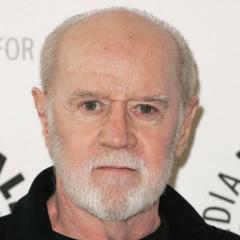
George Carlin
George Carlin

George Carlin, born on May 12, 1937, in New York, USA, was a renowned American comedian, writer, and actor. His career began in the 1960s, and he became famous for his unique sense of humor and insightful observations on social phenomena. Carlin was known for his sharp wit and satirical take on politics, religion, language, and culture, often sparking controversy but also winning widespread acclaim. more

You May Also Like

“I'm often a little perplexed, when I read a review of a book, by the quotes that are pulled out as evidence of excellent prose. I don't think great novels are necessarily composed of great prose, or that there's a correlation between beautiful prose and the quality of a work of fiction. A really good, interesting novel will often let a little ugliness get into its words - to create a certain effect, to leave the reader with a certain sense of disorientation.”

“I don't speak any languages well enough to make an expert assessment on writing in translation, but since I'm interested in awkwardness in prose, I find I like the way translated texts can sometimes acquire awkwardness in the process of translation. There's a discordance translation can create which I think is sometimes seen as a weakness but which I think can be a really interesting aspect of the text.”

“Translated literature can be fascinating. There's something so intriguing about reading the text second hand - a piece of prose that has already been through an extra filter, another consciousness, in the guise of the translator. Some of my favorite writers who have written in English were doing so without English being their first language, so there's a sense of distance or of distortion there, too. Conrad. Nabokov. These writers were employing English in interesting ways.”

“The point about sales is relevant because it suggests there are cultures out there that are supporting and consuming, on a vast scale, challenging works of literature. Works of literature that in the United States would sell only a few thousand copies, if they managed to find a publisher at all. The success of these texts in Spain or Italy or wherever contributes to a kind of national conversation that we're perhaps not having here in the U.S.”

“Evidently, there are many great American writers. But sometimes it can feel as though American fiction is dominated by relatively linear narrative form, with a heavy emphasis on psychological realism. If you limit yourself to a certain kind of American literary fiction, it's easy to forget about the different kinds of books that are being written. You can forget to be ambitious, both as a reader and a writer.”

“Many novelists say, "I'm not a political novelist" - myself included. That's a standard, even a default position. Whereas that divide between art and politics simply isn't possible in many countries. In Hungary, you couldn't be a fiction writer and then, when asked about politics, put your hands up in the air and say "But I'm not a political novelist." If you're a Chinese novelist, a novelist in a country where censorship is such an issue, how do you claim that politics has nothing to do with your writing? It's in your writing, it's shaping your words.”

“I can't define myself as a political writer - I don't think I've earned it, and I don't function as a political writer in the way that many of the writers I admire do. It's not simply a question of context, of where I'm writing from - there is much in American society that urgently needs to be written about. I think your work is always engaged with politics in the looser sense of the word - and that looseness is itself a kind of privilege - because politics and culture are evidently intertwined.”

“I write some art criticism, and one thing that's clear to me is that politics is fashionable in the American art world in a way it maybe isn't in American fiction. Your work of art becomes fashionable the moment it has some kind of political commentary. I think this has its dangers - the equation between fashion, politics, and art is problematic for obvious reasons. Nonetheless, the notion of politics as being de rigueur in the world of fiction is almost unthinkable. In fiction in America at the moment, the escape into whimsy is far more prevalent than the political.”

“I'm interested in dismantling the distinction between masculine and feminine writing both because I think it's a false distinction and, I think, ultimately an insulting one. It's as insulting to men as it is to women. I'm not sure what masculine writing would look like - I assume some combination of Ernest Hemingway and Raymond Carver. Writing can't be gendered in that way.”