Quotessence
Home / Quotes / Quote by Thornton Wilder

Quote by Thornton Wilder

Author

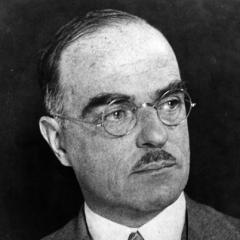
Thornton Wilder
Thornton Wilder

American playwright, renowned for his works 'Our Town' and 'Who's Afraid of Virginia Woolf?'. His works are characterized by deep insight and a unique style, profoundly influencing 20th-century American theater. more

You May Also Like

“The problem is that white people see racism as conscious hate, when racism is bigger than that. Racism is a complex system of social and political levers and pulleys set up generations ago to continue working on the behalf of whites at other people's expense, whether whites know/like it or not. Racism is an insidious cultural disease. It is so insidious that it doesn't care if you are a white person who likes Black people; it's still going to find a way to infect how you deal with people who don't look like you.”

“Yes, racism looks like hate, but hate is just one manifestation. Privilege is another. Access is another. Ignorance is another. Apathy is another, and so on. So while I agree with people who say no one is born racist, it remains a powerful system that we're immediately born into. It's like being born into air: you take it in as soon as you breathe.”

“It's not a cold that you can get over. There is no anti-racist certification class. It's a set of socioeconomic traps and cultural values that are fired up every time we interact with the world. It is a thing you have to keep scooping out of the boat of your life to keep from drowning in it. I know it's hard work, but it's the price you pay for owning everything.”

“More than 2 million people found themselves behind bars at the turn of the twenty-first century, and millions more were relegated to the margins of mainstream society, banished to a political and social space not unlike Jim Crow, where discrimination in employment, housing, and access to education was perfectly legal, and where they could be denied the right to vote.”

“The system functioned relatively automatically, and the prevailing system of racial meanings, identities, and ideologies already seemed natural. Ninety percent of those admitted to prison for drug offenses in many states were Black or Latino, yet the mass incarceration of communities of color was explained in race-neutral terms, an adaptation to the needs and demands of the current political climate.”

“It is unfortunate that we should find ourselves at this time the only disorganized group. Others have had the advantage of organization for centuries, so what seems to them unnecessary, from a racial point of view, becomes necessary to us, who have had to labor all along under the disadvantage of being scattered without a racial aim or purpose.”