Quotessence
Home / Quotes / Quote by David Hume

Quote by David Hume

Work

A Treatise of Human Nature: Revision of Great Book

This book delves into the complexities of human behavior, examining the philosophical underpinnings of human nature, and presents a revised version of a seminal work in the field of philosophy. more

Author
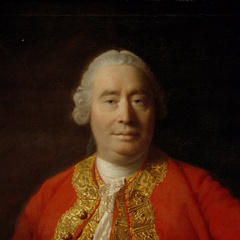
David Hume
David Hume

David Hume, born on May 7, 1711, in Edinburgh, Scotland, and died on August 25, 1776, was an outstanding philosopher, historian, and economist. Known for his contributions to empiricism and skepticism, his works have had a profound impact on subsequent philosophy, economics, and psychology. more

You May Also Like

“It seems certain, that though a man, in a flush of humour, after intense reflection on the many contradictions and imperfections of human reason, may entirely renounce all belief and opinion, it is impossible for him to persevere in this total scepticism, or make it appear in his conduct for a few hours.”

“Were a man, whom I know to be honest and opulent, and with whom I live in intimate friendship, to come into my house, where I am surrounded with my servants, I rest assured, that he is not to stab me before he leaves it, in order to rob me of my silver standish; and I no more suspect this event, than the falling of the house itself which is new, and solidly built and founded.--But he may have been seized with a sudden and unknown frenzy.--So may a sudden earthquake arise, and shake and tumble my house about my ears.”

“We can conceive a thinking being to have either many or few perceptions. Suppose the mind to be reduced even below the life of anoyster. Suppose it to have only one perception, as of thirst or hunger. Consider it in that situation. Do you conceive any thing but merely that perception? Have you any notion of self or substance? If not, the addition of other perceptions can never give you that notion.”

“Justice is a moral virtue, merely because it has that tendency to the good of mankind, and indeed is nothing but an artificial invention to that purpose. The same may be said of allegiance, of the laws of nations, of modesty, and of good manners. All these are mere human contrivances for the interest of society.”

“The mention of one apartment in a building naturally introduces an enquiry or discourse concerning the others: and if we think ofa wound, we can scarcely forbear reflecting on the pain which follows it.”

“Battles, revolutions, pestilence, famine, and death, are never the effect of those natural causes, which we experience. Prodigies,omens, oracles, judgments, quite obscure the few natural events, that are intermingled with them. But as the former grow thinner every pagewe soon learn, that there is nothing mysterious or supernatural in the case, but that all proceeds from the usual propensity of mankind towards the marvellous, and that, though this inclination may at intervals receive a check from sense and learning, it can never be thoroughly extirpated.”