Quotessence
Home / Quotes / Quote by J. G. Farrell

Quote by J. G. Farrell

“... he left Edward wandering from one silent, sleeping room to another, raising branched candlesticks to gaze with inspired eyes at cobwebbed walls and dusty brocade curtains which, after all the years they had hung there, still glinted dimly with their heavy gold thread, woven into the dusty, tattered cloth like the thread of hope that runs from youth to age.”

Quote by J. G. Farrell

Author
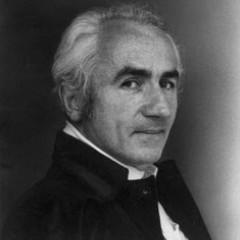
J. G. Farrell
J. G. Farrell

J. G. Farrell was a British novelist known for his profound insights into the history of Ireland and Britain. His works, often set against the backdrop of historical events, explored the impact of social and political changes on individual lives. Farrell's writing style was distinctive, characterized by his meticulous psychological portraits and rich historical details. more

You May Also Like

“For those who haven’t yet experienced climate collapse in our own bodies, a history not yet written into us, the feeling it arrives in the shape of shadows, an atmospheric wrongness, and harrowing predictions; these are stories that change our own. The moment we begin to truly engage with climate science, our narratives of self and future are whirled out of orbit.”

“You can never characterize anybody’s personality in detail. There should always be hidden and unknown aspects of any personality that can put you to confusion. However, you can nearly take it for guaranteed that if whoever is less talkative and sensitive, he/she is more aggressive and sadist by nature, because human brain is designed so that if cells in the communication and emotion centers there are killed off, the cells in the sex and aggression centers will grow. There is a proportion between these centers, which means that if one contains more neurons, the other does less. This negative personality trait can be hidden with the naked eye, but it exists in all probability.”

“From the wheel to the steel - from papyrus to kindle - from churchbell to doorbell - from holy books to comic books - from monotheism to secularism - from fundamentalism to humanism - from steam engine to jet engine - from cave painting to apple pencil - from antibiotics to antipsychotics - from embroidery to surgery - from moving pics to netflix - every single feat that we can think of, good or bad, is born of the neurons. In short, neurons can make the world or break the world.”

“Thus the nerve may be taken to be a relay with essentially two states of activity: firing and repose. Leaving aside those neurons which accept their messages from free endings or sensory end organs, each neuron has its message fed into it by other neurons at points of contact known as synapses. For a given outgoing neuron, these vary in number from a very few to many hundred. It is the state of the incoming impulses at the various synapses, combined with the antecedent state of the outgoing neuron itself, which determines whether it will fire or not. If it is neither firing nor refractory, and the number of incoming synapses which “fire” within a certain very short fusion interval of time exceeds a certain threshold, then the neuron will fire after a known, fairly constant synaptic delay. This is perhaps an oversimplification of the picture: the “threshold” may not depend simply on the number of synapses but on their “weight” and their geometrical relations to one another with respect to the neuron into which they feed; and there is very convincing evidence that there exist synapses of a different nature, the so-called “inhibitory synapses,” which either completely prevent the firing of the outgoing neuron or at any rate raise its threshold with respect to stimulation at the ordinary synapses. What is pretty clear, however, is that some definite combinations of impulses on the incoming neurons having synaptic connections with a given neuron will cause it to fire, while others will not cause it to fire. This is not to say that there may not be other, non-neuronic influences, perhaps of a humoral nature, which produce slow, secular changes tending to vary that pattern of incoming impulses which is adequate for firing.”