Quotessence
Home / Quotes / Quote by Alexander Pope

Quote by Alexander Pope

“First follow Nature, and your judgment frame By her just standard, which is still the same: Unerring nature, still divinely bright, One clear, unchanged, and universal light, Life, force, and beauty must to all impart, At once the source, and end, and test of art.”

Quote by Alexander Pope

Author
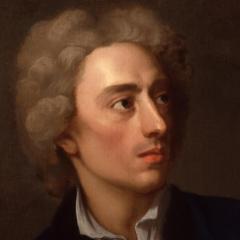
Alexander Pope
Alexander Pope

Alexander Pope, an English poet, was born on May 21, 1688, and died on May 30, 1744. He is renowned for his wit, satire, and elegant poetry, with his most famous works including 'An Essay on Criticism' and 'The Moral Essays'. Pope's works have had a profound impact on literature and philosophy, both in his time and today. more

You May Also Like

“For me, the study of these laws is inseparable from a love of Nature in all its manifestations. The beauty of the basic laws of natural science, as revealed in the study of particles and of the cosmos, is allied to the litheness of a merganser diving in a pure Swedish lake, or the grace of a dolphin leaving shining trails at night in the Gulf of California.”

“I am among those who think that science has great beauty. A scientist in his laboratory is not only a technician: he is also a child placed before natural phenomena which impress him like a fairy tale. We should not allow it to be believed that all scientific progress can be reduced to mechanisms, machines, gearings, even though such machinery has its own beauty.”

“Mathematics is much more than a language for dealing with the physical world. It is a source of models and abstractions which will enable us to obtain amazing new insights into the way in which nature operates. Indeed, the beauty and elegance of the physical laws themselves are only apparent when expressed in the appropriate mathematical framework.”

“Mathematics, rightly viewed, possesses not only truth, but supreme beauty a beauty cold and austere, like that of sculpture, without appeal to any part of our weaker nature, without the georgeous trappings of painting or music, yet sublimely pure, and capable of a stern perfection such as only the greatest art can show. The true spirit of delight, the exaltation, the sense of being more than Man, which is the touchstone of the highest excellence, is to be found in mathematics as surely as in poetry.”