Quotessence
Home / Quotes / Quote by Stanislav Grof

Quote by Stanislav Grof

“This is an extraordinary book of unique psychological power. It reveals not only scholarship and sophistication of the author, but deep and intimate knowledge of the recesses of the human psyche. By masterful juxtaposition of evocative images, poetry, and selected quotes from scholars, Flesh and Blood seems to engage both the right and left hemispheres in an unprecedented dialogue. The result is a multi-dimensional, almost holographic picture of the primordial foundations of the human mind.”

Quote by Stanislav Grof

Author
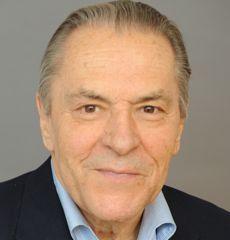
Stanislav Grof
Stanislav Grof

Stanislav Grof is a renowned psychiatrist and psychologist known for his work in the study of consciousness, psychotherapy, and the exploration of human potential. Born on July 1, 1931, he is a pioneer in the fields of psychodrama and consciousness research. more

You May Also Like

“And since the possession of qualities presupposes that one takes a certain pleasure in their reality, all this gives us a glimpse of how it may all of a sudden happen to someone who cannot summon up any sense of reality — even in relation to himself — that one day he appears to himself as a man without qualities.”

“I think that if I were required to spend the rest of my life on a desert island, and to listen to or play the music of any one composer during all that time, that composer would almost certainly be Bach. I really can’t think of any other music which is so all-encompassing, which moves me so deeply and so consistently, and which, to use a rather imprecise word, is valuable beyond all of its skill and brilliance for something more meaningful than that — its humanity.”

“Each of us, even the lowliest and most insignificant among us, was uprooted from his innermost existence by the almost constant volcanic upheavals visited upon our European soil and, as one of countless human beings, I can't claim any special place for myself except that, as an Austrian, a Jew, writer, humanist and pacifist, I have always been precisely in those places where the effects of the thrusts were most violent.”

“In 1938, after Austria, our universe had become accustomed to inhumanity, to lawlessness, and brutality as never in centuries before. In a former day the occurrences in unhappy Vienna alone would have been sufficient to cause international proscription, but in 1938 the world conscience was silent or merely muttered surlily before it forgot and forgave.”