Quotessence
Home / Quotes / Quote by Max Planck

Quote by Max Planck

“Those [scientists] who dislike entertaining contradictory thoughts are unlikely to enrich their science with new ideas.”

Quote by Max Planck

Author
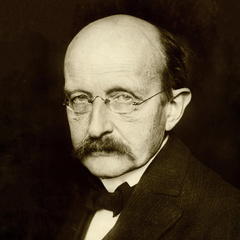
Max Planck
Max Planck

Max Planck, born on April 23, 1858 in Germany, died on October 4, 1947. He was a renowned German physicist and one of the founders of quantum theory, winning the Nobel Prize in Physics in 1918 for his discovery of Planck's constant. more

You May Also Like

“When the bee has gathered the dew of heaven and the earth's sweetest nectar from the flowers, it turns it into honey, then hastens to its hive. In the same way, the priest, having taken from the altar the Son of God (who is as the dew from heaven, and true son of Mary, flower of our humanity), gives him to you as delicious food.”

“When you have received Him, stir up your heart to do Him homage; speak to Him about your spiritual life, gazing upon Him in your soul where He is present for your happiness; welcome Him as warmly as possible, and behave outwardly in such a way that your actions may give proof to all of His Presence.”

“The Sacrament of the Body of the Lord puts the demons to flight, defends us against the incentives to vice and to concupiscence, cleanses the soul from sin, quiets the anger of God, enlightens the understanding to know God, inflames the will and the affections with the love of God, fills the memory with spiritual sweetness, confirms the entire man in good, frees us from eternal death, multiplies the merits of a good life, leads us to our everlasting home, and re-animates the body to eternal life”

“[It is appropriate that the Body and Blood of Christ be truly present in this Sacrament] because of the perfection of the New Covenant. The sacrifices of the Old Covenant contained the true sacrifice of Christ's Passion only in symbol....Therefore it was necessary that the sacrifice of the New Covenant, instituted by Christ, have something more, namely, that it contain Christ Himself who has suffered and contain Him not only in symbol but in reality.”