Quotessence
Home / Quotes / Quote by Randall Jarrell

Quote by Randall Jarrell

Work

A sad heart at the supermarket: essays & fables

This book presents a series of essays and fables that delve into the complexities of the human heart, touching upon various aspects of life and emotion. The essays and fables are crafted to reflect on the human condition, offering readers a contemplative and introspective journey through a variety of emotional landscapes. more

Author
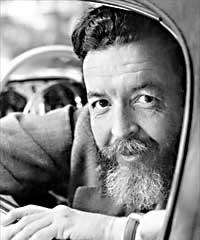
Randall Jarrell
Randall Jarrell

Randall Jarrell was an influential American poet, born on May 6, 1914, and died on October 14, 1965. His poetry is known for its profound emotion and unique style, considered a significant representative of American poetry in the 20th century. more

You May Also Like

“A successful poem says what a poet wants to say, and more, with particular finality. The remarks he makes about his poems are incidental when the poem is good, or embarrassing or absurd when it is bad and he is not permitted to say how the good poem is good, and may never know how the bad poem is bad. It is better to write about other people's poetry.”

“Underneath all his writing there is the settled determination to use certain words, to take certain attitudes, to produce a certain atmosphere; what he is seeing or thinking or feeling has hardly any influence on the way he writes. The reader can reply, ironically, "That's what it means to have a style"; but few people have so much of one, or one so obdurate that you can say of it, "It is a style that no subject can change.”

“We read our mail and counted up our missions In bombers named for girls, we burned The cities we had learned about in school Till our lives wore out; our bodies lay among The people we had killed and never seen. When we lasted long enough they gave us medals; When we died they said, "Our casualties were low." They said, "Here are the maps"; we burned the cities.”

“I don't need to praise anything so justly famous as Frost's observation of and empathy with everything in Nature from a hornet to a hillside; and he has observed his own nature, one person's random or consequential chains of thoughts and feelings and perceptions, quite as well. (And this person, in the poems, is not the "alienated artist" cut off from everybody who isn't, yum-yum, another alienated artist; he is someone like normal people only more so - a normal person in the less common and more important sense of normal.)”

“An intelligent man said that the world felt Napoleon as a weight, and that when he died it would give a great oof of relief. This is just as true of Byron, or of such Byrons of their days as Kipling and Hemingway: after a generation or two the world is tired of being their pedestal, shakes them of with an oof, and then - hoisting onto its back a new world-figure - feels the penetrating satisfaction of having made a mistake all its own.”