Quotessence
Home / Quotes / Quote by Anatole France

Quote by Anatole France

“The law, in its majestic equality, forbids rich and poor alike to sleep under bridges, to beg in the streets, and to steal their bread.”

Quote by Anatole France

Author
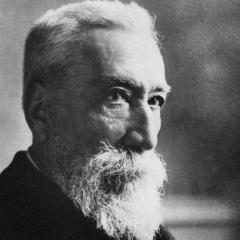
Anatole France
Anatole France

Anatole France, a renowned French poet, was born on April 16, 1844, and passed away on October 12, 1924. His poetry has been highly regarded in the French literary world, known for its unique style and profound connotations. more

You May Also Like

“I am convinced that imprisonment is a way of pretending to solve the problem of crime. It does nothing for the victims of crime, but perpetuates the idea of retribution, thus maintaining the endless cycle of violence in our culture. It is a cruel and useless substitute for the elimination of those conditions--poverty, unemployment, homelessness, desperation, racism, greed--which are at the root of most punished crime. The crimes of the rich and powerful go mostly unpunished. It must surely be a tribute to the resilience of the human spirit that even a small number of those men and women in the hell of the prison system survive it and hold on to their humanity.”

“This is the thing: If you have the option to not think about or even consider history, whether you learned it right or not, or whether it even deserves consideration, that’s how you know you’re on board the ship that serves hors d’oeuvres and fluffs your pillows, while others are out at sea, swimming or drowning, or clinging to little inflatable rafts that they have to take turns keeping inflated, people short of breath, who’ve never even heard of the words hors d’oeuvres or fluff. Then someone from up on the yacht says, "It's too bad those people down there are lazy, and not as smart and able as we are up here, we who have built these strong, large, stylish boats ourselves, we who float the seven seas like kings." And then someone else on board says something like, "But your father gave you this yacht, and these are his servants who brought the hors d'oeuvres." At which point that person gets tossed overboard by a group of hired thugs who'd been hired by the father who owned the yacht, hired for the express purpose of removing any and all agitators on the yacht to keep them from making unnecessary waves, or even referencing the father or the yacht itself. Meanwhile, the man thrown overboard begs for his life, and the people on the small inflatable rafts can't get to him soon enough, or they don't even try, and the yacht's speed and weight cause an undertow. Then in whispers, while the agitator gets sucked under the yacht, private agreements are made, precautions are measured out, and everyone quietly agrees to keep on quietly agreeing to the implied rule of law and to not think about what just happened. Soon, the father, who put these things in place, is only spoken of in the form of lore, stories told to children at night, under the stars, at which point there are suddenly several fathers, noble, wise forefathers. And the boat sails on unfettered.”

“American humorist Kin Hubbard said , "It ain't no disgrace to be poor, but it might as well be". The meanest eating or drinking establishment, owned by a man who is himself poor, is very likely to have a sign on its wall asking this cruel question: "If you're so smart, why ain't you rich?" Americans, like human beings everywhere, believe many things that are obviously untrue... Their most destructive untruth is that it is very easy for any American to make money. They will not acknowledge how in fact hard money is to come by, and, therefore, those who have no money blame and blame and blame themselves. This inward blame has been a treasure for the rich and powerful, who have had to do less for their poor, publicly and privately, than any other ruling class since, say, Napoleonic times. Many novelties have come from America. The most startling of these, a thing without precedent is a mass of undignified poor. They do not love one another because they do not love themselves.”

“Fear of the mob is a superstitious fear. It is based on the idea that there is some mysterious, fundamental difference between rich and poor, as though they were two different races, like Negroes and white men. But in reality there is no such difference. The mass of the rich and the poor are differentiated by their incomes and nothing else, and the average millionaire is only the average dishwasher dressed in a new suit. Change places, and handy dandy, which is the justice, which is the thief? Everyone who has mixed on equal terms with the poor knows this quite well. But the trouble is that intelligent, cultivated people, the very people who might be expected to have liberal opinions, never do mix with the poor. For what do the majority of educated people know about poverty?”

“There is often talk of human rights, but it is also necessary to talk of the rights of humanity. Why should some people walk barefoot, so that others can travel in luxurious cars? Why should some live for thirty-five years, so that others can live for seventy years? Why should some be miserably poor, so that others can be hugely rich? I speak on behalf of the children in the world who do not have a piece of bread. I speak on the behalf of the sick who have no medicine, of those whose rights to life and human dignity have been denied.”

“नीलमणि ने जब प्रवरा की आँखों में देखा, तो उसे लगा जैसे उनमें अथाह प्रेम का कोई सागर उमड़ रहा है। नीलमणि ने जब प्रवरा को उस मूक समर्पण के भाव में देखा, तो उसकी आत्मा में स्थित प्रेम अब मूर्त रूप लेने को विकल हो उठा। निराकार अब साकार होने को व्याकुल हो उठा। पुष्प की श्रद्धा उसे अपने आराध्य तक खींच लाई—वही श्रद्धा जिसे अभिव्यक्त करने में शब्द असमर्थ थे। अंततः दोनों ने माया-रूपी-शरीर को निराकार तत्व की अनुभूति का साधन मान लिया- वही माया जो दो निराकार तत्वों के विलय में बाधक भी थी और एक-मात्र माध्यम भी।”

“The biggest potential for helping us overcome shame is this: We are “those people.” The truth is…we are the others. Most of us are one paycheck, one divorce, one drug-addicted kid, one mental health illness, one sexual assault, one drinking binge, one night of unprotected sex, or one affair away from being “those people”–the ones we don’t trust, the ones we pity, the ones we don’t let our kids play with, the ones bad things happen to, the ones we don’t want living next door.”

“Laziness can be a value on its own for those who want to show supremacy through contempt for work and wish to be free individuals by fighting the enslavement to labor. While they don’t want to become dependent on ‘wage slavery’ and their livelihood only hinges on salaries, they feel confined to a social stratification, causing a collective stigma that results in poverty and underfeeding. (The daily job)”