“The man who finds that in the course of his life he has done a lot of wrong often wakes up at night in terror, like a child with a nightmare, and his life is full of foreboding: but the man who is conscious of no wrongdoing is filled with cheerfulness and with the comfort of old age.”
Quote by Plato
Work
The Republic and Other Works
The Republic is a foundational text in Western philosophy, presenting Plato's theory of forms and his vision of an ideal society governed by philosopher-kings. The collection also features other works by Plato, offering insights into his philosophical ideas on ethics, politics, and the nature of reality. more
Author
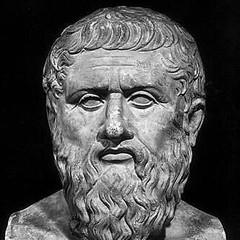
Plato
Plato (428 BC - 348 BC) was a prominent Greek philosopher, one of the most influential figures in Western philosophy. He founded the Academy, which was the first institution of higher education in the Western world. Plato's philosophy, centered around the theory of Forms, emphasized the importance of reason and morality. more
You May Also Like
Source: Open Road Summer
“Your mistakes only define the rest of your life if you let them. Don’t let them.”
Source: A Sky Beyond the Storm
“Every trail has its end, and every calamity brings its lesson!”
Source: The Last of the Mohicans
“You can make heaven out of hell, or hell out of heaven. The choice is yours.”
Source: City of Girls
Source: The Campaigns of Alexander