Quotessence
Home / Quotes / Quote by Bryan Stevenson

Quote by Bryan Stevenson

“...I also reminded people that when the woman accused of adultery was brought to Jesus, he told the accusers who wanted to stone her to death, “Let he who is without sin cast the first stone.” The woman’s accusers retreated, and Jesus forgave her and urged her to sin no more. But today, our self-righteousness, our fear, and our anger have caused even the Christians to hurl stones at the people who fall down, even when we know we should forgive or show compassion. I told the congregation that we can’t simply watch that happen. I told them we have to be stonecatchers.”

Quote by Bryan Stevenson

Work

Just Mercy

Browse quotes and source details for this work. more

Author

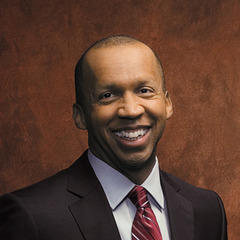
Bryan Stevenson
Bryan Stevenson

Bryan Stevenson is an American lawyer, educator, and social activist known for his contributions to criminal justice reform and the defense of the rights of the poor. Born on November 14, 1959, Stevenson is a professor at the University of Alabama at Birmingham School of Law. more

You May Also Like

“Rearing your children with affection and warmth is a form of activism. Honoring your word impeccably is a way to raise your voice. Performing your job with excellence - with your chin high and your standards higher - is as powerful as any protest march. Sowing into the lives of young people is a worthy crusade. That is what it means to leave this world of ours more lit up than we found it. It's also what it means to live a magnificent life, even if an unlikely one. The Father has a way of choosing the flawed to attempt what many deem improbable.”

“More often than not, universal categories have been clandestinely racialized. Any critical engagement with racism requires us to understand the tyranny of the universal. For most of our history, the very category human has not embraced black people and people of color. Its abstractness has been colored white and gendered male.”

“It was a special army, with no supplies but its sincerity, no uniform but its determination, no arsenal except its faith, no currency but its conscience. it was an army that would move but not maul. It was an army that would sing but not slay. It was an army that would flank but not falter. It was an army to storm bastions of hatred, to lay siege to the fortresses of segregation, to surround symbols of discrimination. It was an army whose allegiance was to God and whose strategy and intelligence were the eloquently simple dictates of conscience. Why We Can't Wait 1963”