Quotessence
Home / Quotes / Quote by William L. Shirer

Quote by William L. Shirer

“When Hitler addressed the Reichstag in January 1934, he could look back on a year of achievement without parallel in German history. Within twelve months he had overthrown the Weimar Republic, substituted his personal dictatorship for its democracy, destroyed all political parties but his own, smashed the state governments and their parliaments and unified and defederalized the Reich, wiped out the labor unions, stamped out democratic associations of any kind, driven the Jews out of public and professional life, abolished freedom of speech and of the press, stifled the independence of the courts and "co-ordinated" under Nazi rule, the political, economic, cultural and social life of an ancient and cultivated people.”

Quote by William L. Shirer

Work

Rise and Fall of the Third Reich Part 2 of 4

Browse quotes and source details for this work. more

Author
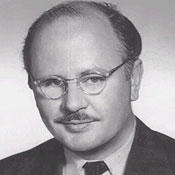
William L. Shirer
William L. Shirer

William L. Shirer was an accomplished American journalist, renowned for his coverage of World War II. His work, 'The Berlin Diary,' provided a detailed account of the rise of Nazi Germany and the lead-up to the war, becoming a classic historical document. more

You May Also Like

“The historian Meike Wöhlert has analyzed and compared the judgments rendered by courts responsible for malicious acts of treason in five cities. Although her research only deals with registered cases and not unofficial ones, the results suggest that the telling of political jokes was a mass phenomenon beyond state control. In 61 percent of official cases, joke-tellers were let off with a warning, alcohol consumption often being cited as an extenuating circumstance. (People who had had one too many in bars were considered only partially responsible for their actions, and because most of the popular jokes that made it to court had been told in bars, the verdicts were accordingly lenient.)”

“The historical record contradicts the assumption that the Nazis sentenced large numbers of people to death during World War II for telling jokes. In the final phase of the Third Reich, some cases did receive capital sentences, but they were extreme exceptions to the rule. (We will return to them later.) The compilations of jokes that circulated in Germany after the war bore titles like Deadly Laughter and When Laughter Was Dangerous, but there is not much evidence that the jokes they contained were inevitably risky for the teller.”

“Finally, my watchers had to fess up. In embarrassed and genuinely polite tones, they said they had no other choice but to arrest me. Then they accompanied me to the prison across the way. As I entered, an extremely tall SS man leapt in front of me and asked: “Do you have any weapons?” “Why?” I responded. “Do I need any?”

“Comrades, we are going to try to cheer you up, and our sense of humor will help us in this endeavor, although the phrase gallows humor has never seemed so logical and appropriate. The external circumstances are exactly in our favor. We need only to take a look at the barbed wire fences, so high and full of electricity. Just like your expectations. And then there are the watchtowers that monitor our every move. The guards have machine guns. But machine guns won’t intimidate us, comrades. They just have barrels of guns, whereas we are going to have barrels of laughs. You may be surprised at how upbeat and cheerful we are. Well, comrades, there are goods reasons for this. It’s been a long time since we were in Berlin. But every time we appeared there, we felt very uneasy. We were afraid we’d get sent to the concentration camps. Now that fear is gone. We’re already here.”

“On April 1, armed SA men took up positions in front of Jewish businesses and tried to prevent customers from spending money in them. Some troops painted anti-Semitic slogans and Stars of David on display windows; others were content to hold up signs calling for a boycott and to curse at Jewish businessmen. Some areas also saw looting and acts of violence. All in all, this display of activism made a very negative impression on most people, and the thuggish SA men with their uneducated bellowing were left even less popular among the general population than they had been before. Although very few Germans openly declared their solidarity with their Jewish fellow citizens, the boycott did not, as it was intended to do, set German gentiles against German Jews. On the contrary, ordinary people felt sorry for them, and if reports by the Nazis, who were disappointed by the boycott, are to be believed, the amount of commerce done afterward by Jewish-owned business did not decline at all.”

“. Despite the considerable horror they had felt when the SA men were bellowing crude anti-Semitic slogans, in retrospect the joke-tellers were very much aware of the boycott’s inherent absurdity: A city on the Rhine during the boycott: SA men stand in front of Jewish businesses and “warn” passers-by against entering them. Nonetheless, a woman tries to go into a knitting shop. An SA man stops her and says, “Hey, you. Stay outside. That’s a Jewish shop!” “So?” replies the woman. “I’m Jewish myself.” The SA man pushes her back. “Anyone can say that!”

“Certain directors and actors were constantly preoccupied by one problem, and apparently, one only. This was connected with the so-called German greeting, which was the method of hailing a friend by raising the right arm straight out with the hand extended at, or slightly above, the level of the shoulder. This greeting had very definite political implications; it was employed daily by millions; and the directors and actors saw no reason why it should not be one on the films in a simple and life-like fashion. They failed. Even when shown in the rushes the effect on the select and professional audience was simply to produce uncontrollable hilarity. The cinema can do a great deal. It can entrance, t can tell fairy tales, it can be realistic or surrealistic -- but it cannot portray a gesture that is false without underlining the most brutal way its basic falseness. The German cinema could not reproduce the German greeting; it was the greeting that was to blame, not the cinema.”