Quotessence
Home / Quotes / Quote by Elena Ferrante

Quote by Elena Ferrante

“Adults, waiting for tomorrow, move in a present behind which is yesterday or the day before yesterday or at most last week: they don't want to think about the rest. Children don't know the meaning of yesterday, or even of tomorrow, everything is this, now: the street is this, the doorway is this, the stairs are this, this is Mamma, this is Papa, this is the day, this the night.”

Quote by Elena Ferrante

Work

My Brilliant Friend

Browse quotes and source details for this work. more

Author

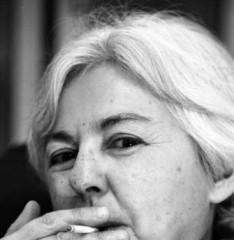
Elena Ferrante
Elena Ferrante

Elena Ferrante is a renowned contemporary Italian novelist, known for her unique narrative style and profound character portrayals. Her works cover a wide range of themes, including family, love, power, and social class. Ferrante's novels have received widespread acclaim both in Italy and around the world, despite the mystery surrounding her true identity. more

You May Also Like

“Had I catalogued the downsides of parenthood, "son might turn out to be a killer" would never have turned up on the list. Rather, it might have looked something like this: 1. Hassle. 2. Less time just the two of us. (Try no time just the two of us.) 3. Other people. (PTA meetings. Ballet teachers. The kid's insufferable friends and their insufferable parents.) 4. Turning into a cow. (I was slight, and preferred to stay that way. My sister-in-law had developed bulging varicose veins in her legs during pregnancy that never retreated, and the prospect of calves branched in blue tree roots mortified me more than I could say. So I didn't say. I am vain, or once was, and one of my vanities was to feign that I was not.) 5. Unnatural altruism: being forced to make decisions in accordance with what was best for someone else. (I'm a pig.) 6. Curtailment of my traveling. (Note curtailment. Not conclusion.) 7. Dementing boredom. (I found small children brutally dull. I did, even at the outset, admit this to myself.) 8. Worthless social life. (I had never had a decent conversation with a friend's five-year-old in the room.) 9. Social demotion. (I was a respected entrepreneur. Once I had a toddler in tow, every man I knew--every woman, too, which is depressing--would take me less seriously.) 10. Paying the piper. (Parenthood repays a debt. But who wants to pay a debt she can escape? Apparently, the childless get away with something sneaky. Besides, what good is repaying a debt to the wrong party? Only the most warped mother would feel rewarded for her trouble by the fact that at last her daughter's life is hideous, too.)”

“It is a fundamental truth that the responsibilities of motherhood cannot be successfully delegated. No, not to day-care centers, not to schools, not to nurseries, not to babysitters. We become enamored with men’s theories such as the idea of preschool training outside the home for young children. Not only does this put added pressure on the budget, but it places young children in an environment away from mother’s influence. Too often the pressure for popularity, on children and teens, places an economic burden on the income of the father, so mother feels she must go to work to satisfy her children’s needs. That decision can be most shortsighted. It is mother’s influence during the crucial formative years that forms a child’s basic character. Home is the place where a child learns faith, feels love, and thereby learns from mother’s loving example to choose righteousness. How vital are mother’s influence and teaching in the home—and how apparent when neglected!”

“This idea that children won't learn without outside rewards and penalties, or in the debased jargon of the behaviorists, "positive and negative reinforcements," usually becomes a self-fulfilling prophecy. If we treat children long enough as if that were true, they will come to believe it is true. So many people have said to me, "If we didn't make children do things, they wouldn't do anything." Even worse, they say, "If I weren't made to do things, I wouldn't do anything." It is the creed of a slave.”