“People are afraid to merge on freeways in Los Angeles. This is the first thing I hear when I come back to the city. Blair picks me up from LAX and mutters this under her breath as she drives up the onramp. She says, "People are afraid to merge on freeways in Los Angeles." Though that sentence shouldn't bother me, it stays in my mind for an uncomfortably long time. Nothing else seems to matter. Not the fact that I'm eighteen and it's December and the ride on the plane had been rough and the couple from Santa Barbara, who were sitting across from me in first class, had gotten pretty drunk. Not the mud that had splattered on the legs of my jeans, which felt kind of cold and loose, earlier that day at an airport in New Hampshire. Not the stain on the arm of the wrinkled, damp shirt I wear, a shirt which looked fresh and clean this morning. Not the tear on the neck of my gray argyle vest, which seems vaguely more eastern than before, especially next to Blair's clean tight jeans and her pale-blue shirt. All of this seems irrelevant next to that one sentence. It seems easier to hear that people are afraid to merge than "I'm pretty sure Muriel is anorexic" or the singer on the radio crying out about magnetic waves. Nothing else seems to matter to me but those ten words. Not the warm winds, which seem to propel the car down the empty asphalt freeway, or the faded smell of marijuana which still faintly permeates Blaire's car. All it comes down to is the fact that I'm a boy coming home for a month and meeting someone whom I haven't seen for four months and people are afraid to merge.”
Quote by Bret Easton Ellis
Work
Written by James Ellroy, this novel is a collection of interconnected short stories that delve into the experiences of various young individuals navigating the complexities of their lives and society during a period of significant cultural change. more
Author
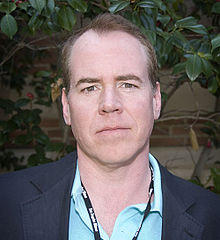
American novelist known for his profound insights into modern urban life and sharp criticism. His works, including 'Less Than Zero' and 'The Rules of Attraction', are renowned for their unique narrative style and sharp social observations. more
You May Also Like
“Tenderly he reached for her and lightly took her hand, lifted it, and touched it to his lips.”
“The point was to learn what it was we feared more: being misunderstood or being betrayed.”
“I only fear danger where I want to fear it.”
“Your lack of fear is based on your ignorance.”