Quotessence
Home / Quotes / Quote by Salvador de Madariaga

Quote by Salvador de Madariaga

“On the one hand, it is in and through creative minds that the community fulfils itself at its best and reaches its highest forms; and on the other, it is from them that the community recovers the social substance with which it had nourished them, transfigured by their creative alchemy into a still higher social substance. The creative evolution of his community and his own creative evolution must always be the two earnest purposes of the individual. Its own creative evolution and that of the individuals in its midst must always be the two earnest purposes of the community.”

Quote by Salvador de Madariaga

Work

Essays with a Purpose

This book compiles a series of essays that delve into diverse subjects, offering insights and perspectives on life, society, and personal growth. more

Author
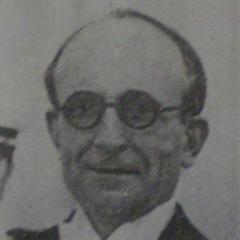
Salvador de Madariaga

Salvador de Madariaga, born on July 23, 1886, and died on December 14, 1978, was a prominent Spanish politician, diplomat, writer, and critic. He is one of the most important political figures of the 20th century in Spain, renowned for his diplomatic skills and literary achievements. more

You May Also Like

“I recognized the great monument from the illustration in the copy of /The Jungle Book/ that my mother kept in the top drawer of my bedside table. When I went with Sophia to the Taj Mahal for the first time, I was not as enchanted by the real mausoleum as I had been by its plaster, paint, and paper replica in the studio; the original posed a dreadfully seductive promise in cool marble of a strangely painful loveliness, a lover's lie that death itself might in some mysterious way, because of love, be lovely.”

“Dalin must have whiffed the anarch in me, a man with no ties to state or society. Still, he was unable to sense an autonomy that puts up with these forces as objective facts but without recognizing them. What he lacked was a grounding in history. Opposition is collaboration; this was something from which Dalin, without realizing it, could not stay free. Basically, he damaged order less than he confirmed it. The emergence of the anarchic nihilist is like a goad that convinces society of its unity. The anarch, in contrast, not only recognizes society a priori as imperfect, he actually acknowledges it with that limitation. He is more or less repulsed by state and society, yet there are times and places in which the invisible harmony shimmers through the visible harmony. This is obviously chiefly in the work of art. In that case, one serves joyfully. But the anarchic nihilist thinks the exact opposite. The Temple of Artemis, to cite an example, would inspire him to commit arson. The anarch, however, would have no qualms about entering the temple in order to meditate and to participate with an offering. This is possible in any temple worthy of the name.”

“- Vidite, umetnik, to je "sumnjivoo lice", maskiran čovek u sumraku, putnik sa lažnim pasošem. Lice pod maskom je divno, njegov rang je mnogo viši nego što u pasošu piše, ali šta to mari? Ljudi ne vole tu neizvesnost ni tu zakukuljenost, i zato ga zovu sumnjivim i dvoličnim. A sumnja, kad se jednom rodi, ne poznaje granica. Sve i kad bi umetnik mogao nekako da objavi svetu svoju pravu ličnost i svoje pozvanje, ko bi mu verovao da je to njegova poslednja reč? I kad bi pokazao svoj pravi pasoš, ko bi verovao da nema u džepu sakriven neki treći? I kad bi skinuo masku u želji da se iskreno nasmeje i pravo pogleda, bilo bi još uvek ljudi koji bi ga molili da bude potpuno iskren i poverljiv i da zbaci i tu poslednju masku koja toliko liči na ljudsko biće. Umetnikova sudbina je da u životu pada iz jedne neiskrenosti u drugu i da vezuje protivrečnost za protivrečnost. I oni mirni i srećni kod kojih se to najmanje vidi i oseća, i oni se u sebi stalno kolebaju i sastavljaju bez prestanka dva kraja koja se nikad sastaviti ne daju.”