Quotessence
Home / Quotes / Quote by David Harvey

Quote by David Harvey

“The electoral victories of Thatcher (1979) and Reagan (1980) are often viewed as a distinctive rupture in the politics of the postwar period. I understand them more as consolidations of what was already under way throughout much of the 1970s. The crisis of 1973-5 was in part born out of a confrontation with the accumulated rigidities of government policies and practices built up during the Fordist-Keynesian period. Keynesian policies had appeared inflationary as entitlements grew and fiscal capacities stagnated. Since it had always been part of the Fordist political consensus that redistributions should be funded out of growth, slackening growth inevitably meant trouble for the welfare state and the social wage.”

Quote by David Harvey

Work

Author

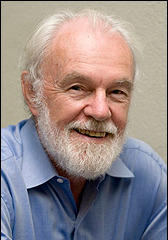
David Harvey
David Harvey

David Harvey, born on October 31, 1935, is a renowned British geographer, Marxist theorist, and social theorist. He has conducted extensive research in the field of geography, particularly on issues of capital accumulation, urban geography, and postmodern geography. Professor Harvey's work has had a profound impact on academic research and political movements worldwide. more

You May Also Like

“When I met Wittgenstein, I saw that Schlick's warnings were fully justified. But his behavior was not caused by any arrogance. In general, he was of a sympathetic temperament and very kind; but he was hypersensitive and easily irritated. Whatever he said was always interesting and stimulating and the way in which he expressed it was often fascinating. His point of view and his attitude toward people and problems, even theoretical problems, were much more similar to those of a creative artist than to those of a scientist; one might almost say, similar to those of a religious prophet or a seer. When he started to formulate his view on some specific problem, we often felt the internal struggle that occurred in him at that very moment, a struggle by which he tried to penetrate from darkness to light under an intense and painful strain, which was even visible on his most expressive face. When finally, sometimes after a prolonged arduous effort, his answers came forth, his statement stood before us like a newly created piece of art or a divine revelation. Not that he asserted his views dogmatically ... But the impression he made on us was as if insight came to him as through divine inspiration, so that we could not help feeling that any sober rational comment of analysis of it would be a profanation.”

“Philosophy is that activity by which the meaning of propositions is established or discovered; it is a question of what the propositions actually mean. The content, soul, and spirit of science naturally consist in what is ultimately meant by its sentences; the philosophical activity of rendering significant is thus the alpha and omega of all scientific knowledge. [Moritz Schlick interpreting Ludwig Wittgenstein's position]”

“Di chi non si sa nulla, non c'è niente da dire. Di chi non si sa nulla, nulla più importa. In quel luogo di confino Yui scoprì d'aver imparato un'altra cosa importante, ovvero che un uomo bastava tacerlo per eliminarlo per sempre. Per questo serviva ricordare le storie, parlare con le persone, parlare delle persone. Ascoltare le persone parlare di altre persone. Anche dialogare con i morti, se fosse servito.”

“Men tillige med denne U-ligheds Ophævelse, forsvandtes all Æmulation; saa at de, som tilforn havde søgt at distingvere sig ved Videnskab og Flittighed, for at nyde de Embeder, som vare best aflagde, bleve lunkne i deres Studeringer; og, naar nogen bebreydede dem saadant, svarede de: Hvad nytter det, at vi distingvere os blant andre, naar Belønningerne ere lige?og havde de derudi ikke U-ret.”