“When I met Wittgenstein, I saw that Schlick's warnings were fully justified. But his behavior was not caused by any arrogance. In general, he was of a sympathetic temperament and very kind; but he was hypersensitive and easily irritated. Whatever he said was always interesting and stimulating and the way in which he expressed it was often fascinating. His point of view and his attitude toward people and problems, even theoretical problems, were much more similar to those of a creative artist than to those of a scientist; one might almost say, similar to those of a religious prophet or a seer. When he started to formulate his view on some specific problem, we often felt the internal struggle that occurred in him at that very moment, a struggle by which he tried to penetrate from darkness to light under an intense and painful strain, which was even visible on his most expressive face. When finally, sometimes after a prolonged arduous effort, his answers came forth, his statement stood before us like a newly created piece of art or a divine revelation. Not that he asserted his views dogmatically ... But the impression he made on us was as if insight came to him as through divine inspiration, so that we could not help feeling that any sober rational comment of analysis of it would be a profanation.”
Quote by Rudolf Carnap
Work
The Philosophy of Rudolf Carnap, Volume 11
Browse quotes and source details for this work. more
Author
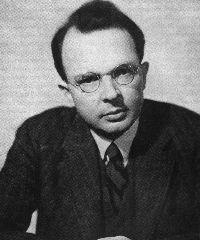
Rudolf Carnap
Rudolf Carnap, a German-American philosopher, was a prominent figure in the logical positivist movement. Born on May 18, 1891, and died on September 14, 1970, Carnap is known for his contributions to logic, philosophy of language, and philosophy of science. more
You May Also Like
Source: La voce degli uomini freddi
Source: The Phone Booth at the Edge of the World
“Inhale possibility, exhale creativity.”
Source: The Little Star
“Art shackled is no art at all.”
Source: Darkly Dreaming
Source: Epistler
Source: Protestants: The Faith That Made the Modern World