Quotessence
Home / Quotes / Quote by Madeleine L'Engle

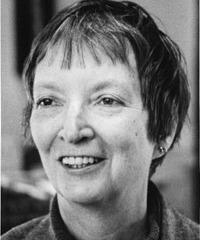
Quote by Madeleine L'Engle

“We are going to your father," Mrs. Which said. "But where is he?" Meg went over to Mrs. Which and stamped as though she were as young as Charles Wallace. Mrs. Whatsit answered in a voice that was low but quite firm. "On a planet that has given in. So you must prepare to be very strong.”

Quote by Madeleine L'Engle

Work

A Wrinkle in Time

In this classic science fiction novel, Meg Murry, a young girl with a strong-willed personality, embarks on a journey to find her missing father, a renowned physicist. Accompanied by her younger brother Charles Wallace and Calvin O'Keefe, a mysterious boy, they encounter various beings and traverse different dimensions. The story delves into complex scientific concepts and metaphysical questions, while also emphasizing the importance of love, bravery, and the power of imagination. more

Author

Madeleine L'Engle
Madeleine L'Engle

American writer, born on November 29, 1918, and died on September 6, 2007. Madeleine L'Engle is renowned for her science fiction and fantasy novels, with her most famous work being 'A Wrinkle in Time'. more

You May Also Like

“Life in all its resiliency, beauty and strength is sometimes eclipsed by its unquestionable transient frailty. Today we are alive…tomorrow is not promised. And it seems, the evil that lurks in the shadows, this side of heaven, often has its say. But let it never be that we allow evil, which basks in our fear, to hinder our ability to live vibrantly unafraid of what tomorrow might bring. The only way to defeat the inevitable darkness that touches this world is to live and love brilliantly bright with purpose. To not do so, is to diminish the very memory and glow of all the beautiful lights that have gone out before us.”

“There's a stream that trickles through all of us. It's always there. It's evil and we know this, so we force it to mix with the larger river inside us. We let it be consumed by the greater flow of good. But when the good in the river runs dry and there isn't enough of it to dilute the stream, then the stream flows faster and harder, uncontrolled, and it finally floods one life, then another, then another. And it's always the innocent who are easiest to pull down. It's always the innocent who are standing there on the banks and looking in, curious and trusting and sometimes, maybe, even a little brave.”

“Meg looked. The dark shadow was still there. It had not lessened or dispersed with the coming of night. And where the shadow was, the stars were not visible. What could there be about a shadow that was so terrible that she knew that there had never been before or ever would be again, anything that would chill her with a fear that was beyond shuddering, beyond crying or screaming, beyond the possibility of comfort?”

“It contained a sad, but too common story of the hard-heartedness of the wealthy, and the misery endured by the children of the highborn. Blood is not water, it is said, but gold with them is dearer far than the ties of nature; to keep and augment their possessions being the aim and end of their lives, the existence, and, more especially, the happiness of their children, appears to them a consideration at once trivial and impertinent, when it would compete with family views and family greatness. To this common and and iniquitous feeling these luckless beings were sacrificed; they had endured the worst, and could be injured no more; but their orphan child was a living victim, less thought of than the progeny of the meanest animal which might serve to augment their possessions. Mrs. Baker felt some complacency on reading this letter; with the common English respect for wealth and rank, she was glad to find that her humble roof had sheltered a man who was the son — she did not exactly know of whom, but of somebody, who had younger sons and elder sons, and possessed, through wealth, the power of behaving frightfully ill to a vast number of persons.”

“Progress in evil was quick and easy; Apollyon was not a chap who hid himself and he gave every assistance in his power. The growth in goodness was so slow, at times so flat, so dull, and like the White Queen one had to run so fast to stay where one was, let alone progress; and there were few men who dared to say they had found God. It was easy to be a clever sinner, for the race to an earthly visible goal was short to run, so impossibly hard to be a wise saint, with the goal set at so vast a distance from this world and clouded with such uncertainty.”

“Why could Tolkien not be more like Sir Thomas Malory, asked [Edwin] Muir, in the third Observer review of those cited above, and give us heroes and heroines like Lancelot and Guinevere, who ' knew temptation, were sometimes unfaithful to their vows,' were engagingly marked by adulterous passion? But T.H. White had already considered that paradigm, was indeed rewriting it at the same time as Tolkien in The Once and Future King; and he had seen the core of Malory's work not in romantic vice but in the human urge to murder. In White the poisonous adder that provokes the last disastrous battle is no adder but a harmless grass-snake, and the flash of the sword which brings on the two armies is not natural self-defense but natural blood-lust, creating a continuum from cruelty to animals to world wars and holocausts. Malory has to be rewritten to encompass a new view of evil.”