“There’s a psychological mechanism, I’ve come to believe, that prevents most of us from imagining the moment of our own death. For if it were possible to imagine fully that instant of passing from consciousness to nonexistence, with all the attendant fear and humiliation of absolute helplessness, it would be very hard to live, as it would be unbearably obvious that death is inscribed in everything that constitutes life, that any moment of our existence is a breath away from being the last one. We would be continuously devastated by the magnitude of that inescapable moment, so our minds wisely refuse to consider it. Still, as we mature into mortality, we gingerly dip our horror-tingling toes in the void, hoping that the mind will somehow ease itself into dying, that God or some other soothing opiate will remain available as we venture deeper into the darkness of nonbeing. But how can you possibly ease yourself into the death of your child? For one thing, it is supposed to happen well after your own dissolution into nothingness. Your children are supposed to outlive you by several decades, in the course of which they’ll live their lives, happily devoid of the burden of your presence, eventually completing the same mortal trajectory as their parents: oblivion, denial, fear, the end. They’re supposed to handle their own mortality, and no help in that regard (other than forcing them to confront death by way of your dying) can come from you—death ain’t a science project. And even if you could imagine your child’s death, why would you?”
Quote by Aleksandar Hemon
Book:The Book of My Lives
Work
The Book of My Lives
This book is a compilation of the author's life stories, insights, and reflections, offering a glimpse into their personal journey and the transformative moments that shaped their existence. more
Author
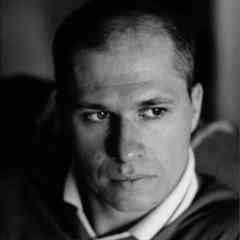
Aleksandar Hemon
Aleksandar Hemon is a Serbian-American writer known for his unique literary style and profound humanistic concerns. His works focus on themes of immigration, identity, and individual experience, and have won him a wide readership. more
You May Also Like
Source: The Old Garden
Source: The Old Garden
Source: The Fall of Language in the Age of English
“The point is not to let the orthography distract the reader from the meaning.”
Source: Between You & Me: Confessions of a Comma Queen
Source: Lingüística i normativa
Source: Gramática de la lengua castellana