Quotessence
Home / Quotes / Quote by William Blake

Quote by William Blake

“The Devil answer'd: bray a fool in a morter with wheat, yet shall not his folly be beaten out of him; if Jesus Christ is the greatest man, you ought to love him in the greatest degree; now hear how he has given his sanction to the law of ten commandments: did he not mock at the sabbath, and so mock the sabbaths God? murder those who were murder'd because of him? turn away the law from the woman taken in adultery? steal the labor of others to support him? bear false witness when he omitted making a defense before Pilate? covet when he pray'd for his disciples, and when he bid them shake off the dust of their feet against such as refused to lodge them? I tell you, no virtue can exist without breaking these ten commandments; Jesus was all virtue, and acted from impulse, not from rules.”

Quote by William Blake

Work

The Marriage of Heaven and Hell

A collection of essays and poems that delve into the nature of love, death, and the human experience, offering a unique perspective on the complexities of life and the mysteries of the universe. more

Author
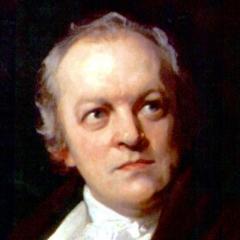
William Blake
William Blake

William Blake (November 28, 1757 - August 12, 1827) was an English Romantic poet, painter, and printmaker. Known for his unique visual art and profound philosophical thoughts, he is considered one of the most innovative poets in the history of English literature. more

You May Also Like

“Recently I told a well-known, highly paid woman novelist the sub-title if this book: 'Is feminism relevant to the new millennium?' 'Of course it is,' she said without missing a beat. 'We still don't have equal pay.' Everywhere, powerful women repeat this mantra. Even Germaine Greer now says nothing has really changed. Influential feminists insist that because there are still many individual areas of injustice or unfairness, there is still an overarching system of sexual injustice with men always advantaged and women disadvantaged. One injustice, like the inequality which exists between the average pay of women and the average pay of men, is supposed to prove the rest. But this is no longer true in any simple way. Of course, women still suffer many injustices, discriminations and sometimes even outrages but it is no longer a simple coherent picture of male advantage and female disadvantage.”

“The fact that they're shaped like tiny elves!" Keefe said, clapping his hands before he pointed to the label. "Hang on-THEY CALL THEM 'ELF WITCHES'?" "They do, Keefe. They do. And that's not even the best part." "AHHHHHH LOOK AT THEIR LITTLE FACES!" Keefe shouted as he peeled back the plastic cover. "THIS IS THE GREATEST THING I HAVE EVER SEEN---EVER!" "Greater than when you discovered Fitz slept with Mr. Snuggles?" Sophie had to ask. "Um. YEAH. They have names, Foster. NAMES!" He held up one of the cookies and pointed to the name tag the little elf was holding. "This one's Ernie! AHHHH AND THIS ONE IS FAST EDDIE!" he said, snatching a different cookie. "And this one is Bickets! And Elwood! I don't know who named these guys, but whoever they are, they're a genius, I tell you--a GENIUS. - Legacy, chapter 37, page 596-97 hardcover.”

“The movement's institutional legacy can also be seen in the realm of higher education: Chicano and Puerto Rican studies programs are the product of these movements and continue to play a key role in providing Latinos with a "civic education" that both politicizes and produces particular conceptions of Latino identity and subjectivity.”

“Unlike the civil rights struggles of African Americans or the protest politics surrounding the Vietnam War, the Chicano and Puerto Rican movements represent a decidedly underexplored aspect of 1960s New Left radicalism. Outside of the communities themselves, the names, places, and events of these two movements are virtually unknown.”

“That we have scholars and Chicana PHDers of this caliber teaching in our educational institutions fulfills a vision of what we hoped would come out of the Chicano Movement. Even more extraordinary is the fact that most scholars do not forget “la causa Chicana,” thus watering the raices of the ancient past and living Chicano epic.”

“Of all of my writings probably the article that created the biggest whoooraah turned out to be "The Woman of La Raza." This lost me friends and made me a target for the renowned "Malinche" label. But, like so many of my writings, the rewards were many and this article opened centuries-old flood gates that poured forth in women's words and thoughts. I knew "This is very important," and from this article came a whole women's history book, The Women of La Raza. This women's book begins to define the side of that mestizo face medallion we wore so proudly, La India. The Chicana/o Movement is a vital chapter of Southwestern history, a history needed to inspire new dreamers as activists become the elder generation. As we recall this chapter in Chicano history, we reseed the harvest of the Civil Rights Movement and cultivate the harvest of "La Revolución Chicana" remembering that our ancestors planted the first resisting seeds of non-defeat. This Revolución is the foundation of today's evolving issues, the metamorphosis of activism that makes all movements more important than ever. It will take more than thirty years to change 500 years of colonial racist exploitative attitudes, changes which only you can make possible as we live the sun of justice, The Sixth Sun.”

“And what about César Chávez in California? What's the history of the campesino and what is he fighting for? These are our people too. And in Texas our brothers and sisters have a struggle. Just what is this all about? What is happening to our people? We feel what is happening, let's learn about it and let's start speaking up. Let's talk to each other and let's not be afraid to be heard. (1969)”