Quotessence
Home / Quotes / Quote by Dara Horn

Quote by Dara Horn

Work

People Love Dead Jews: Reports from a Haunted Present

Browse quotes and source details for this work. more

Author
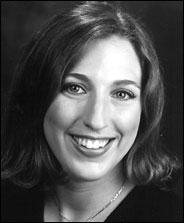
Dara Horn
Dara Horn

Dara Horn is an American novelist born in 1977. Her works are known for their profound character development and complex narrative structures, covering themes such as history, religion, and identity. more

You May Also Like

“Appeasement as a policy soon failed. The powerful Babylonian empire, desiring the vast treasures stored in Jerusalem’s Temple, conquered the Holy Land in 586 BCE—razing the building to its foundations. The once glorious city of Jerusalem lay in ruins, a physical embodiment of a spiritual collapse. The Babylonians seized not only the Temple’s material wealth but also carted off its human capital, taking the Israelites’ priests, scholars, and skilled elite back to the court in Babylon—where the exiles wept by its rivers.”

“From the lowest depths of his jail cell, Joseph identifies himself for the first time with forefathers, reconnecting to his heritage despite being cut off from his family for years. Despite living in a foreign land alone amidst a foreign people, Joseph declares that he has remained true to his people’s core values. One of those values is gratitude, and for the first time Joseph acknowledges that his talents are God-given rather than earned. He has ended up in prison because of unwavering gratitude to a human master who selflessly cared for him, a devotion that mirrors his gratitude to the Divine Master. In this terrible low moment, Joseph sounds fulfilled for the first time in his life, as the principled decision to accept imprisonment provides an uplifting sense of purpose. With renewed appreciation for God’s care, Joseph challenges his fellow inmates to reject backstabbing pagan deities whose flaring egos drive them to relentlessly pursue self-aggrandizement at the expense of others. As humans naturally emulate the characteristics of their deities, Joseph prefers an ethical and compassionate Divine Mentor.”

“IN THE fifteenth century, a swampy parcel of land in the sestieri of Cannaregio was set aside for the construction of a new brass foundry, known in the Venetian dialect as a geto. The foundry was never built, and a century later, when the rulers of Venice were looking for a suitable spot to confine the city’s swelling population of unwanted Jews, the remote parcel known as Ghetto Nuovo was deemed the ideal place. The campo was large and had no parish church. The surrounding canals formed a natural moat, which cut off the island from the neighboring communities, and the single bridge could be guarded by Christian watchmen. In 1516, the Christians of Ghetto Nuovo were evicted and the Jews of Venice were forced to take their place. They could leave the ghetto only after sunrise, when the bell tolled in the campanile, and only if they wore a yellow tunic and hat. At nightfall they were required to return to the island, and the gates were chained. Only Jewish doctors could leave the ghetto at night. At its height, the population of the ghetto was more than five thousand. Now, it was home to only twenty Jews.”