Quotessence
Home / Quotes / Quote by Daniel Silva

Quote by Daniel Silva

“IN THE fifteenth century, a swampy parcel of land in the sestieri of Cannaregio was set aside for the construction of a new brass foundry, known in the Venetian dialect as a geto. The foundry was never built, and a century later, when the rulers of Venice were looking for a suitable spot to confine the city’s swelling population of unwanted Jews, the remote parcel known as Ghetto Nuovo was deemed the ideal place. The campo was large and had no parish church. The surrounding canals formed a natural moat, which cut off the island from the neighboring communities, and the single bridge could be guarded by Christian watchmen. In 1516, the Christians of Ghetto Nuovo were evicted and the Jews of Venice were forced to take their place. They could leave the ghetto only after sunrise, when the bell tolled in the campanile, and only if they wore a yellow tunic and hat. At nightfall they were required to return to the island, and the gates were chained. Only Jewish doctors could leave the ghetto at night. At its height, the population of the ghetto was more than five thousand. Now, it was home to only twenty Jews.”

Quote by Daniel Silva

Author
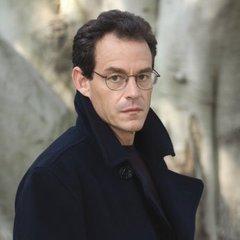
Daniel Silva
Daniel Silva

Daniel Silva is a renowned American author known for his spy novels. His works often revolve around complex international politics and espionage, and are highly appreciated by readers. more

You May Also Like

“And yet to reach for examples from the Holocaust, or the Jewish diaspora, has become a natural reflex when the question of ethnic or religious minorities comes up. It is a moral yardstick, yet at the same time an evasion. To be reminded of past crimes, of negligence or complicity, is never a bad thing. But it can confuse the issues at hand, or worse, bring all discussion to a halt by tarring opponents with the brush of mass murder.”

“Ken sos tu? I am Rebecca (Rivka, Rebekah) from my mother’s mother and the wife of Isaac in the Bible. The name means “to tie firmly” or “to snare,” which is why—or so her mother used to tell her when she struggled at sewing—she could, with practice, become skilled with a needle and thread. I am Camayor, from my mother’s father, Behor Camayor of blessed memory, and also Cohen, high priests descended from the sons of Aaron, a name she feels she must live up to, though she’ll hide it as needed and may God forgive her. I am from the pomegranate tree my father planted at my birth, from my nuns in white habits, my staircase with the worn ninth tread, the candlelight reflected in my fingernails. I am a gypsy girl, because to have no home place had once seemed romantic and she could do the dance, just as she could climb ropes at gymnastics, rising and lowering at will. Or was it actually that home, back then, was everywhere?”

“Jewish self-image and its historiographic reflection were transformed by the destruction of the state and temple and the exile of the Jewish people. But continuity was preserved in language and scripture, memory and commemoration. The rabbis were not only the supplanters but also the heirs and custodians of the old tradition from which they claimed to derive their own legitimacy. The situation in Persia and in other Middle Eastern countries was radically different. Here the conquest and conversion of these peoples to Islam brought radical change and, above all, discontinuity. Muslim conquest brought a new religion and the consequent changes were far greater than, for example, in Christendom. Christianity triumphed in the Roman Empire, but it did so by conversion, not by conquest, and it preserved the Roman state and the Roman law and learned to live with the Latin and Greek heritage. Islam created its own state, the Caliphate, and brought its own language, Arabic, and its own scripture, the Qur’an. The old states were destroyed. The old languages and even the old scripts were forgotten. The rupture was not as complete as was once thought, or as Muslims claimed, and much pre-Islamic custom survived under an Islamic veneer. [...] There was no usable past from a Muslim point of view—hence the Muslim neglect both of history and of epic, with only minor exceptions. There was thus complete discontinuity in the self-image, the corporate sense of identity, and the collective memory of the Islamic peoples of the Middle East.”