Quotessence
Home / Quotes / Quote by Angela Thirkell

Quote by Angela Thirkell

“Tony went upstairs with an expressionless face, undressed, folded his clothes neatly, washed his face and hands, and got into bed. He was full of resentment against the world. People made one dive when one could really dive quite well if one had a proper diving board. If one killed a wasp people seemed to be annoyed instead of being grateful. People didn't even want one to bark like a dog, he thought, remembering earlier grievances. Girls were simply a nuisance and he was glad he had burst Dora's pig. People who said "nyang, nyang" like that deserved to have their pigs burst.”

Quote by Angela Thirkell

Work

The Demon in the House

Browse quotes and source details for this work. more

Author
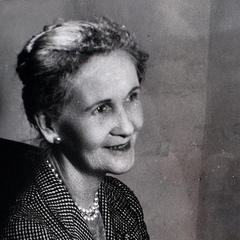
Angela Thirkell
Angela Thirkell

Angela Thirkell was an English novelist known for her light-hearted and humorous writing style, as well as her detailed portrayal of English rural life. Her works often featured satire and humor, showcasing social and human aspects, and were well-received by readers. more

You May Also Like

“My mother - Contained God itself A tarnished look of pain A hand clutching her heart A love we can not name A fog or a smoke An infinite thirst for life (But the wing is dead under the frost.) My mother - Is an uncertain form She gets lost when she walks And we sit in the valley And I shelter her to my love My mother Is a broken sky That exhales day and night Its beauty. My mother - Is the scent of a hundred roses And the suffering of so many things My mother Is no more than a dream - I suppose Of those who are said lips closed And behind her veil She sleeps - my mother - And her star Do not doubt anymore of its light.”

“Larissa grew quiet, her skin burnished with a rosy glow. Through childhood, she had been the easiest of children, clingy and shy, but eager to please Nadia. The former was just now shedding but a difficult age was looming, when you could visibly see the closing of the gates, your child's mind shutting itself off from you growing impenetrable. Just in the last few months, Nadia watched a new, defiant personality that was pushing against the safe borders carefully crafted for her.”

“Our voice of conscience is the result of our social conditioning, which becomes a ‘learned instinct’. If you feel bad when you lie, it may not be because of the voice of your soul but because you have been taught since your childhood to tell the truth and not to lie. Over the course of time, the need to speak truth sinks into your subconscious mind and become your consciousness and your learned instinct.”

“Cosmic Ordering success sticks to you like mud to a blanket.”

“I was never a child; I never had a childhood. I cannot count among my memories warm, golden days of childish intoxication, long joyous hours of innocence, or the thrill of discovering the universe anew each day. I learned of such things later on in life from books. Now I guess at their presence in the children I see. I was more than twenty when I first experienced something similar in my self, in chance moments of abandonment, when I was at peace with the world. Childhood is love; childhood is gaiety; childhood knows no cares. But I always remember myself, in the years that have gone by, as lonely, sad, and thoughtful. Ever since I was a little boy I have felt tremendously alone―and "peculiar". I don't know why. It may have been because my family was poor or because I was not born the way other children are born; I cannot tell. I remember only that when I was six or seven years old a young aunt of mind called me vecchio―"old man," and the nickname was adopted by all my family. Most of the time I wore a long, frowning face. I talked very little, even with other children; compliments bored me; baby-talk angered me. Instead of the noisy play of the companions of my boyhood I preferred the solitude of the most secluded corners of our dark, cramped, poverty-stricken home. I was, in short, what ladies in hats and fur coats call a "bashful" or a "stubborn" child; and what our women with bare heads and shawls, with more directness, call a rospo―a "toad." They were right. I must have been, and I was, utterly unattractive to everybody. I remember, too, that I was well aware of the antipathy I aroused. It made me more "bashful," more "stubborn," more of a "toad" than ever. I did not care to join in the games played by other boys, but preferred to stand apart, watching them with jealous eyes, judging them, hating them. It wasn't envy I felt at such times: it was contempt; it was scorn. My warfare with men had begun even then and even there. I avoided people, and they neglected me. I did not love them, and they hated me. At play in the parks some of the boys would chase me; others would laugh at me and call me names. At school they pulled my curls or told the teachers tales about me. Even on my grandfather's farm in the country peasant brats threw stones at me without provocation, as if they felt instinctively that I belonged to some other breed.”

“Wie kann ein erwachsener Mensch seine Jugend nur so vollkommen vergessen, dass er eines Tages überhaupt nicht mehr weiß, wie traurig und unglücklich Kinder bisweilen sein können. Es ist nämlich gleichgültig, ob man wegen einer zerbrochenen Puppe weint oder weil man, später einmal, einen Freund verliert.”