Quotessence
Home / Quotes / Quote by Michael Thomas Ford

Quote by Michael Thomas Ford

Work

Suicide Notes

This book delves into the lives of individuals grappling with the profound impact of loss, offering a raw and honest portrayal of the emotional turmoil that can accompany the end of life. Through a series of interconnected stories, readers are invited to reflect on the fragility of human existence and the enduring power of memory. more
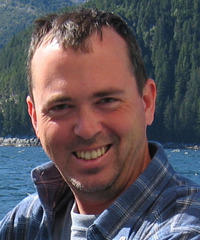
Author

Michael Thomas Ford
Michael Thomas Ford

Michael Thomas Ford, born on October 1, 1968, is an accomplished author. His works span various genres and are recognized for their unique perspective and profound insights. more

You May Also Like

“When reduced to nothing more than principle of the mind, humility will never be low enough for humility. On principle, the man who lives in the small mountain cottage is more large and luxurious than the man who lives in the tiny shack; the man who lives in the tiny shack, than the man who sleeps on the bank; the man who sleeps on the bank, than the man who wanders the desert; the man who wanders the desert at least has legs to wander while many other men do not. To reduce by the standards of men is to morally compete against men, and to reduce by one's own standards is ego-driven. A man can decrease his life to death and never reach true lowliness because humility on principle of the mind is not humility at all but rather its opposite: the pride of competition - only in reverse. Therefore it seems that, perhaps, true humility is nothing one can achieve; it hides in purity of the heart given only by the one perfect Christ.”

“What happens to job performance if we don’t practice humility in the form of self-awareness? We risk overestimating our abilities, which can result in insufficient effort, missed deadlines, and lower quality of work—all of which can add up to decreased performance.”

“This is where Lent starts, with the voice of God, singing the praise of Jesus, the Son. Just as this affirmation calls Jesus into the wilderness, so it calls us, too. We are starting out from a place of loving acceptance, not from one of rejection; we are starting out with the certainty that God knows who we are and loves us, so that are explorations are to find out why that should be. We are exploring a reality that is given to us, not achieved by our own effort. Yet, glorious as this sounds, it is also terrifying, because if it starts with God and not with us, then we are not in control of it. Jesus steps into the River Jordan with such apparent ease, laying aside all claims to define himself, and that is our journey, too. So easy and so hard.”

“Zechariah asks for proof... Mary, on the other hand, points out the obstacles of the angel's plan - she is a virgin - but she asks nothing else... Mary simply says: 'Here I am, the servant of the Lord', ' yes, I will do this.' Later generations of Christians went on to justify God's choice of Mary by investing her with a miraculous childhood and holy parents, making her worthy in ways that we can understand. But that seems to undermine the point that Luke helps us to see: Zechariah was 'worthy,' in all outward forms, but he muffed it. Mary is simply willing. The Magnificat is Mary's theology: what God sees in her is precisely her 'lowliness', which gives her insight into the character of God, whose mercy 'scatters the proud', 'brings down the powerful', so that the hungry can be filled. God's mercy makes space for those who are thought to be of no account, and Mary knows herself to be one of them.”

“As Jesus dies, the world order changes for ever, by the act of God... Jesus accepts the world's judgement, and that puts an end to it. We have judged God, assuming in our arrogance and fear that we had that power. Now we wait, trembling, to see what the new order looks like, when we realize that the one we have crucified is the measure, the judge, the standard. We have done everything we can think of, and our resources are exhausted. The humble God has relentlessly absorbed all our cruelty, violence, hopelessness, selfishness and fear, never returning like for like, but carrying it away with him into death. All that is left now is the action of God.”