Quotessence
Home / Quotes / Quote by Antonio Gramsci

Quote by Antonio Gramsci

“Cosa significa il fatto che il popolo italiano legge di preferenza gli scrittori stranieri? Significa che esso subisce l'egemonia intellettuale e morale degli intellettuali stranieri, che esso si sente legato piú agli intellettuali stranieri che a quelli «paesani», cioè che non esiste nel paese un blocco nazionale intellettuale e morale, né gerarchico e tanto meno egualitario. Gli Gli intellettuali non escono dal popolo, anche se accidentalmente qualcuno di essi è d'origine popolana, non si sentono legati ad esso (a parte la retorica), non ne conoscono e non ne sentono i bisogni, le aspirazioni, i sentimenti diffusi, ma, nei confronti del popolo, sono qualcosa di staccato, di campato in aria, una casta, cioè, e non un'articolazione, con funzioni organiche, del popolo stesso.È da ricordare ciò che scrisse Edoardo Boutet sugli spettacoli classici (Eschilo, Sofocle) che la Compagnia Stabile di Roma diretta appunto dal Boutet dava all'Arena del Sole di Bologna il lunedí – giorno delle lavandaie – e sul grande successo che tali rappresentazioni avevano. È anche da rilevare il successo che nelle masse popolari hanno sempre avuto alcuni drammi dello Shakespeare, ciò che appunto dimostra come si possa essere grandi artisti e nello stesso tempo «popolari».”

Quote by Antonio Gramsci

Author
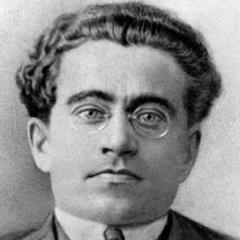
Antonio Gramsci
Antonio Gramsci

Antonio Gramsci, born on January 22, 1891, and died on April 27, 1937, was an Italian politician, philosopher, and writer. He was a prominent figure in the Italian Communist movement and is known for his unique theoretical contributions and profound analysis of cultural, political, and social issues. more

You May Also Like

“Before proceeding with a detailed analysis, it is worth elaborating what I mean by the word ‘state’ within the context of this book. Gramsci presented a number of definitions for the term in his Prison Notebooks, written while imprisoned by the fascist regime in Italy(1). The one that I find most relevant to the case of Egypt under direct military rule is a definition that views the state merger between the concepts of civil and political society. In simpler terms, the state as a social reformation contains both: the public apparatus of the state (political society), such as the judicial system, and the private apparatus (civil society), like the media, education system and so on (Carnoy, 1983). Accordingly, the state is everywhere and is the tool used by the ruling class to project their power over society, which is very germane to the Egyptian case. Indeed, the ultimate goal of the Egyptian military establishment is not only dominance over the public state apparatus, but the use of its position to accumulate social power, extending the boundaries of the state so that it swallows up the private sphere—establishing total dominance over society and transforming the public space into a militarized space. This metaphor has been used by Zineb Abu-El Magd in her detailed study of the military’s economic empire (Abu Al Magd, 2018), albeit through a Foucaultian theoretical lens. Abu-El Magd has argued that the military’s economic dominance allowed it to penetrate the lives of ordinary Egyptians, transforming the country into a military camp. In this chapter, however, I intend to use the metaphor to examine the military’s dominance over the state and its ability to use the state apparatus to transform the public space, in a manner that is unique to Sisi and his regime.” Chapter 2: The New Leviathan, page 51”

“Comencemos por rechazar la errada suposición de que el liberalismo es una ideología. Una ideología es siempre una concepción del acontecer humano (...) que parte del rígido criterio de que el idéologo conoce de dónde viene la humanidad, por qué se desplaza en esa dirección y hacia dónde debe ir. De ahí que toda ideología, por definición, sea un tratado de 'ingeniería social', y cada ideólogo sea, a su vez, un 'ingeniero social'. Alguien dedicado a la siempre peligrosa tarea de crear 'hombres nuevos', no contaminados por las huellas del antiguo régimen. Sólo que esa actitud, lamentablemente, suele dar lugar a grandes catástrofes, y en ella está, como señaló Popper, el origen del totalitarismo.”

“Liberalni filozofowie, z pozoru indywidualiści, byli prawdziwymi kolektywistami w tym sensie, że bronili interesów wielu jednostek, a nie tylko praw wąskiej grupy uprzywilejowanych, gdy tymczasem protagoniści ideologii kolektywistycznych (o orientacji czy to narodowej czy klasowej) zajmowali się głównie usprawiedliwianiem prawa nielicznych wybrańców do poświęcania dla własnych celów (definiowanych jako dobro wspólne) wielkiej liczby bezsilnych ludzi" (Czarnoksięstwo w naukach społecznych, s. 189)”

“Beati coloro che accettano senza discutere la disciplina in cui vivono, che obbediscono liberamente agli ordini dei capi...o coloro che sono pervenuti, per vie proprie, a convinzioni chiare e incrollabili...Coloro che riposano su questi comodi letti dogmatici sono vittime di forme di miopia autoindotta e portano paraocchi che possono anche dare l'appagamento, ma non certo la comprensione di cosa significa essere uomo.”

“Si nos pusiéramos a enumerar las series de las grandes ideas originales que el hombre ha alumbrado a lo largo de su historia, nos encontraríamos que son relativamente pocas y casi nunca enteramente originales. Las más cautivantes ideologías que ha producido Occidente son hijas de mil padres y siempre es posible hallar sus más remotas raíces en algún fragmento de un filósofo griego.”