Quotessence
Home / Quotes / Quote by Joseph Brodsky

Quote by Joseph Brodsky

“The eye in this city acquires an autonomy similar to that of a tear. The only difference is that it doesn't sever itself from the body but subordinates it totally. After a while - on the third or fourth day here- the body starts to regard itself as merely the eye's carrier, as a kind of submarine to its now dilating, now squinting periscope. Of course, for all its targets, its explosions are invariably self-inflicted: it's own heart, or else your mind, that sinks; the eye pops up to the surface. This, of course, owes to local topography, to the streets - narrow, meandering like eels - that finally bring you to a flounder of a campo with a cathedral in the middle of it, barnacled with saints and flaunting its Medusa-like cupolas. No matter what you set out for as you leave the house here, you are bound to get lost in these long, coiling lanes and passageways that beguile you to see them through to follow them to their elusive end, which usually hits water, so that you can't even call it a cul-de-sac. On the map this city looks like two grilled fish sharing a plate, or perhaps like two nearly overlapping lobster claws ( Pasternak compared it to a swollen croissant); but it has no north, south, east, or west; the only direction it has is sideways. It surrounds you like frozen seaweed, and the more you dart and dash about trying to get your bearings, the more you get lost. The yellow arrow signs at intersections are not much help either, for they, too, curve. In fact, they don't so much help you as kelp you. And in the fluently flapping hand of the native whom you stop to ask for directions, the eye, oblivious to his sputtering, A destra, a sinistra, dritto, dritto, readily discerns a fish.”

Quote by Joseph Brodsky

Work

Watermark

Browse quotes and source details for this work. more

Author

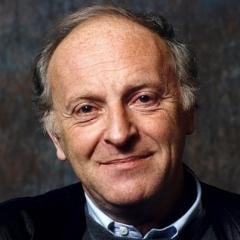
Joseph Brodsky
Joseph Brodsky

Joseph Brodsky (May 24, 1940 - January 28, 1996) was a prominent poet of the 20th century, known for his profound thoughts and unique poetic style. His works cover a wide range of themes, including personal experiences, historical events, and philosophical reflections. Brodsky's poetry is characterized by its beautiful language and philosophical depth, and has had a profound impact on literature worldwide. more

You May Also Like

“Why, then, do you go there at such a season?" my editor asked me once, sitting in a Chinese restaurant in New York, with his gay English charges. "Yes, why do you ?" they echoed their prospective benefactor. "What is it like there in winter ?" I thought of telling them about acqua alta; about the various shades of gray in the window as one sits for breakfast in one's hotel, enveloped by silence and the mealy morning pall of newlyweds' faces; about pigeons accentuating every curve and cornice of the local Baroque in their dormant affinity for architecture; about a lonely monument to Francesco Querini and his two huskies carved out of Istrian stone, similar, I think, in its hue, to what he saw last, dying, on his ill-fated journey to the North Pole, now listening to the Giardini's rustle of evergreens in the company of Wagner and Carducci; about a brave sparrow perching on the bobbing blade of a gondola against the backdrop of a sirocco-roiled damp infinity. No, I thought, looking at their effete but eager faces; no, they won't do. "Well, I said, "it's like Greta Garbo swimming.”

“A tear can be shed in this place on several occasions. Assuming that beauty is the distribution of light in the fashion most congenial to one's retina, a tear is an acknowledgment of the retina's, as well as the tear's, failure to retain beauty. On the whole, love comes with the speed of light; separation, with that of sound. It is the deterioration of the greater speed to the lesser that moistens one's eye. Because one is finite, a departure from this place always feel final; leaving it behind is leaving it forever. For leaving is banishment of the eye to the provinces of the other senses; at best, to the crevices and crevasses of the brain. For the eye identifies itself not with the body it belongs to but with the object of its attention. And to the eye, for purely optical reasons, departure is not the body leaving the city but the city abandoning the pupil. Likewise, disappearance of the beloved, especially a gradual one, causes grief no matter who, and for what peripatetic reason, is actually in motion. As the world goes, this city is the eye's beloved. After it, everything is a letdown. A tear is the anticipation of the eye's future.”

“He turns toward the voice. It is as though the darkness itself has spoken. But when he looks closer he can make her out - the very pale blonde hair first, gleaming in what little light there is, then the shimmering stuff of her dress.”

“Why, then, do you go there at such a season?" my editor asked me once, sitting in a Chinese restaurant in New York, with his gay English charges. "Yes, why do you ?" they echoed their prospective benefactor. "What is it like there in winter ?" I thought of telling them about acqua alta; about the various shades of gray in the window as one sits for breakfast in one's hotel, enveloped by silence and the mealy morning pall of newlyweds' faces; about pigeons accentuating every curve and cornice of the local Baroque in their dormant affinity for architecture; about a lonely monument to Francesco Querini and his two huskies carved out of Istrian stone, similar, I think, in its hue, to what he saw last, dying, on his ill-fated journey to the North Pole, now listening to the Giardini's rustle of evergreens in the company of Wagner and Carducci; about a brave sparrow perching on the bobbing blade of a gondola against the backdrop of a sirocco-roiled damp infinity. No, I thought, looking at their effete but eager faces; no, they won't do. "We;;, I said, "it's like Greta Garbo swimming.”

“A questo punto, a costo di interrompere il filo del discorso, viene spontaneo un contro tra il destino dell’Inghilterra e quello dell’Italia. L’Inghilterra si ritrovò tra le mani ottima lana quando (nel Medioevo) la lana era la materia prima più ricercata; si ritrovò tra le mani ottimo ed abbondante carbone quando (ai tempi della Rivoluzione Industriale) la materia prima più preziosa era il carbone; e si ritrovò tra le mani il petrolio del mre del Nord quando (ai giorni nostri) il petrolio divenne la fonte di energia più usata nell’attività produttiva. In contrasto l’Italia ebbe poca e grama lana nel Medioevo, pochissimo e gramissimo carbone nella Rivoluzione Industriale, e pochissimo e gramissimo petrolio nell’epoca corrente: in compenso ebbe sempre abbondanza di marmo che usò soprattutto per adornare chiese ed erigere monumenti funerari nei cimiteri.”

“I’m considering keeping the shutters open, even if people are spying on me at night from the apartment across the street. Especially if they are spying on me. It makes me feel less alone. I have a mental camaraderie with that imaginary person and their imaginary gaze. I find myself performing myself for them and exaggerating my facial expressions so they can see me more clearly, like actors project their voices on stage. I’m miming myself.”