“Father Brendan Flynn: "A woman was gossiping with her friend about a man whom they hardly knew - I know none of you have ever done this. That night, she had a dream: a great hand appeared over her and pointed down on her. She was immediately seized with an overwhelming sense of guilt. The next day she went to confession. She got the old parish priest, Father O' Rourke, and she told him the whole thing. 'Is gossiping a sin?' she asked the old man. 'Was that God All Mighty's hand pointing down at me? Should I ask for your absolution? Father, have I done something wrong?' 'Yes,' Father O' Rourke answered her. 'Yes, you ignorant, badly-brought-up female. You have blamed false witness on your neighbor. You played fast and loose with his reputation, and you should be heartily ashamed.' So, the woman said she was sorry, and asked for forgiveness. 'Not so fast,' says O' Rourke. 'I want you to go home, take a pillow upon your roof, cut it open with a knife, and return here to me.' So, the woman went home: took a pillow off her bed, a knife from the drawer, went up the fire escape to her roof, and stabbed the pillow. Then she went back to the old parish priest as instructed. 'Did you gut the pillow with a knife?' he says. 'Yes, Father.' 'And what were the results?' 'Feathers,' she said. 'Feathers?' he repeated. 'Feathers; everywhere, Father.' 'Now I want you to go back and gather up every last feather that flew out onto the wind,' 'Well,' she said, 'it can't be done. I don't know where they went. The wind took them all over.' 'And that,' said Father O' Rourke, 'is gossip!”
Quote by John Patrick Shanley
Book:Doubt, a Parable
Work
Doubt, a Parable
Browse quotes and source details for this work. more
Author
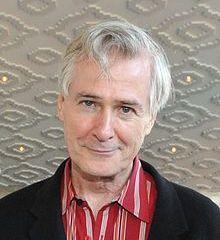
John Patrick Shanley
John Patrick Shanley is an American playwright known for his profound exploration of human nature and unique narrative style. His works have won numerous Tony Awards and Pulitzer Prizes, with his most famous play being 'Doubt: A Parable'. more
You May Also Like
Source: A Beautiful Lie
Source: The Marquis' Secret
“If you want to understand what is wrong with stupid people you must be one of them.”
“You can’t argue with religious people; you can’t change their mind even if you prove them wrong.”
Source: An Atheist Manifesto
“When everything was right, something was bound to go wrong. (Jessica)”
Source: Minutes Before Sunset
“Rationality doesn’t exist; right is absence of wrongness and wrong is what seems to be unfair.”
“Es que la gente parece que le tiene miedo a los estereotipos, a los lugares comunes...”
Source: The Wrong Man