“About his madmen Mr. Lecky was no more certain. He knew less than the little to be learned of the causes or even of the results of madness. Yet for practical purposes one can imagine all that is necessary. As long as maniacs walk like men, you must come close to them to penetrate so excellent a disguise. Once close, you have joined the true werewolf. Pick for your companion a manic-depressive, afflicted by any of the various degrees of mania - chronic, acute, delirious. Usually more man than wolf, he will be instructive. His disorder lies in the very process of his thinking, rather than in the content of his thought. He cannot wait a minute for the satisfaction of his fleeting desires or the fulfillment of his innumerable schemes. Nor can he, for two minutes, be certain of his intention or constant in any plan or agreement. Presently you may hear his failing made manifest in the crazy concatenation of his thinking aloud, which psychiatrists call "flight of ideas." Exhausted suddenly by this riotous expense of speech and spirit, he may subside in an apathy dangerous and morose, which you will be well advised not to disturb. Let the man you meet be, instead, a paretic. He has taken a secret departure from your world. He dwells amidst choicest, most dispendious superlatives. In his arm he has the strength to lift ten elephants. He is already two hundred years old. He is more than nine feet high; his chest is of iron, his right leg is silver, his incomparable head is one whole ruby. Husband of a thousand wives, he has begotten on them ten thousand children. Nothing is mean about him; his urine is white wine; his faeces are always soft gold. However, despite his splendor and his extraordinary attainments, he cannot successfully pronounce the words: electricity, Methodist Episcopal, organization, third cavalry brigade. Avoid them. Infuriated by your demonstration of any accomplishment not his, he may suddenly kill you. Now choose for your friend a paranoiac, and beware of the wolf! His back is to the wall, his implacable enemies are crowding on him. He gets no rest. He finds no starting hole to hide him. Ten times oftener than the Apostle, he has been, through the violence of the unswerving malice which pursues him, in perils of waters, in perils of robbers, in perils of his own countrymen, in perils by the heathen, in perils in the city, in perils in the wilderness, in perils in the sea, in perils among false brethren, in weariness and painfulness, in watchings often, in hunger and thirst, in fastings often, in cold and nakedness. Now that, face to face with him, you simulate innocence and come within his reach, what pity can you expect? You showed him none; he will certainly not show you any. Lighten our darkness, we beseech thee, 0 Lord; and by thy great mercy defend us from all the perils and dangers of this night; for the love of thy only Son, our Saviour, Jesus Christ. Amen. Mr. Lecky's maniacs lay in wait to slash a man's head half off, to perform some erotic atrocity of disembowelment on a woman. Here, they fed thoughtlessly on human flesh; there, wishing to play with him, they plucked the mangled Tybalt from his shroud. The beastly cunning of their approach, the fantastic capriciousness of their intention could not be very well met or provided for. In his makeshift fort everywhere encircled by darkness, Mr. Lecky did not care to meditate further on the subject.”
Quote by James Gould Cozzens
Book:Castaway
Work
Author
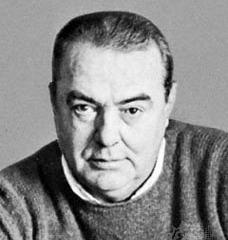
James Gould Cozzens
James Gould Cozzens was an American novelist born on August 19, 1903, in Ohio, and died on August 9, 1978. Known for his historical and military novels, Cozzens' works deeply portrayed the changes in American society and history. more
You May Also Like
“Believe those who are seeking the truth. Doubt those who find it.”
Source: Seraphic Addiction
Source: Stuart: A Life Backwards
“With every vial of success there is always a pinch of madness.”
Source: Autobiography of a Schizophrenic Girl
Source: Walking with Bilbo: A Devotional Adventure through the Hobbit
Source: Satan's High Priest
Source: The Diary of Anaïs Nin, Vol. 1: 1931-1934