Quotessence
Home / Quotes / Quote by Bertrand Russell

Quote by Bertrand Russell

“The life of Man is a long march through the night, surrounded by invisible foes, tortured by weariness and pain, towards a goal that few can hope to reach, and where none may tarry long. One by one, as they march, our comrades vanish form our sight, seized by the silent orders of omnipotent Death. Very brief is the time in which we can help them, in which their happiness or misery is decided. Be it ours to shed sunshine on their path, to lighten their sorrows by the balm of sympathy, to give them the pure joy of a never-tiring affection, to strengthen failing courage, to instill faith in times of despair.”

Quote by Bertrand Russell

Author
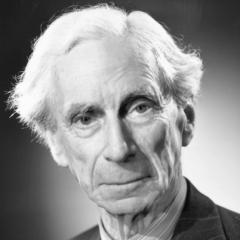
Bertrand Russell
Bertrand Russell

Bertrand Russell was a British philosopher, mathematician, and logician born on May 18, 1872, and died on February 2, 1970. He is known for his contributions to logic and mathematics, particularly in the fields of mathematical logic and philosophical analysis. His works spanned a wide range of subjects, including ethics, political philosophy, history, and literary criticism. more

You May Also Like

“In short, trauma is about loss of connection to ourselves, to our bodies, to our families, to others, and to the world around us. This loss of connection is often hard to recognize, because it doesn't happen all at once. It can happen slowly, over time, and we adapt to these subtle changes sometimes without even noticing them. These are the hidden effects of trauma, the ones most of us keep to ourselves. We may simply sense that we do not feel quite right, without ever becoming fully aware of what is taking place; that is, the gradual undermining of our self-esteem, self-confidence, feelings of well-being, and connection to life. Our choices become limited as we avoid certain feelings, people, situations, and places. The result of this gradual constriction of freedom is the loss of vitality and potential for the fulfillment of our dreams." Healing Trauma: A Pioneering Program for Restoring the Wisdom of Your Body, Peter Levine”

“I would not suggest that we love without reason or be reckless in our loving. But our definition of ‘reason’ and ‘reckless’ cannot be determined by the price that we might pay in loving those who would do us damage in the loving. Rather, any such definition must be based on the degree to which the person loved might be transformed by the sacrifice we incur in and by the loving.”

“Displacement (shifting a feeling toward one person onto a safer alternative) is considered a neurotic defense, neither primitive nor mature. A person who was yelled at by her boss but could get fired if she yelled back might come home and yell at her dog. Or a woman who felt angry at her mother after a phone conversation might displace that anger onto her son.”

“In short, trauma is about loss of connection to ourselves, to our bodies, to our families, to others, and to the world around us. This loss of connection is often hard to recognize, because it doesn't happen all at once. It can happen slowly, over time, and we adapt to these subtle changes sometimes without even noticing them. These are the hidden effects of trauma, the ones most of us keep to ourselves. We may simply sense that we do not feel quite right, without ever becoming fully aware of what is taking place; that is, the gradual undermining of our self-esteem, self-confidence, feelings of well-being, and connection to life. Our choices become limited as we avoid certain feelings, people, situations, and places. The result of this gradual constriction of freedom is the loss of vitality and potential for the fulfillment of our dreams.”