Quotessence
Home / Quotes / Quote by Geoffrey Willans

Quote by Geoffrey Willans

“It hapens very often that parents think they are worred about the progress a boy is making. they do not realise that all boys are numskulls with o branes which is not surprising when you look at the parents really the whole thing goes on and on and there is no stoping it it is a vicious circle.”

Quote by Geoffrey Willans

Author
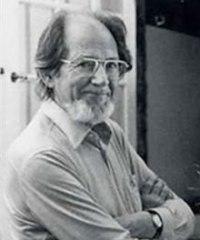
Geoffrey Willans
Geoffrey Willans

Geoffrey Willans was a British author born on February 4, 1911, and died on August 6, 1958. Known for his humor and讽刺,he was particularly renowned for his critical portrayal of British society and culture. more

You May Also Like

“The time period in question was before the proliferation of outsourcing, but there was already Craigslist as a “ready reserve” resource. I had to resolutely disregard interesting-but-unhelpful search terms with advertising of local people looking for “casual encounters” and “rants and raves.” In the possibly more helpful Craigslist category enigmatically titled “Gigs,” I typed in: Lawyer seeks help. College drop-out preferred. Long hours, pressure-cooker environment, unyielding schedule. Pays all the Ramen noodles you can eat. Great opportunity to broaden your horizons and enhance your resume! It was a truthful description of the job, and consequently, I did not expect many takers.”

“Hold on to that thought and examine it, for there you will find evil’s greatest weapon. What can I do, when I am so small and weak? Why should I not steal a little; everyone else does? Why should I try to be pure, when it leaves me poor and dis-regarded? How can I change the world? Yet all ideas, for good or evil, start in the heart of a single man or woman. From there they spread, one to one, two to two, a hundred to a hundred.”

“Ghosts! […] I almost think we are all of us ghosts. It is not only what we have inherited from our father and mother that ‘walks’ in us. It is all sorts of dead ideas, and lifeless old beliefs, and so forth. They have no vitality, but they cling to us all the same, and we cannot shake them off. Whenever I take up a newspaper, I seem to see ghosts gliding between the lines. There must be ghosts all the country over, as thick as the sands of the sea. And then we are, one and all, so pitifully afraid of the light.”

“A thought expressed is a falsehood." In poetry what is not said and yet gleams through the beauty of the symbol, works more powerfully on the heart than that which is expressed in words. Symbolism makes the very style, the very artistic substance of poetry inspired, transparent, illuminated throughout like the delicate walls of an alabaster amphora in which a flame is ignited. Characters can also serve as symbols. Sancho Panza and Faust, Don Quixote and Hamlet, Don Juan and Falstaff, according to the words of Goethe, are "schwankende Gestalten." Apparitions which haunt mankind, sometimes repeatedly from age to age, accompany mankind from generation to generation. It is impossible to communicate in any words whatsoever the idea of such symbolic characters, for words only define and restrict thought, but symbols express the unrestricted aspect of truth. Moreover we cannot be satisfied with a vulgar, photographic exactness of experimental photoqraphv. We demand and have premonition of, according to the allusions of Flaubert, Maupassant, Turgenev, Ibsen, new and as yet undisclosed worlds of impressionability. This thirst for the unexperienced, in pursuit of elusive nuances, of the dark and unconscious in our sensibility, is the characteristic feature of the coming ideal poetry. Earlier Baudelaire and Edgar Allan Poe said that the beautiful must somewhat amaze, must seem unexpected and extraordinary. French critics more or less successfully named this feature - impressionism. Such are the three major elements of the new art: a mystical content, symbols, and the expansion of artistic impressionability. No positivistic conclusions, no utilitarian computation, but only a creative faith in something infinite and immortal can ignite the soul of man, create heroes, martyrs and prophets... People have need of faith, they need inspiration, they crave a holy madness in their heroes and martyrs. ("On The Reasons For The Decline And On The New Tendencies In Contemporary Literature")”