Quotessence
Home / Quotes / Quote by Richard Siken

Quote by Richard Siken

“There’s a dream in the space between the hammer and the nail: the dream of about-to-be-hit, which is a bad dream, but the nail will take the hit if it gets to sleep inside the wood forever.”

Quote by Richard Siken

Work

War of the Foxes

In this gripping science fiction tale, a group of rebels known as the Foxes wage a relentless battle against an oppressive regime in a dystopian world. The story follows their struggle for freedom and justice amidst a backdrop of political intrigue and technological advancements. more
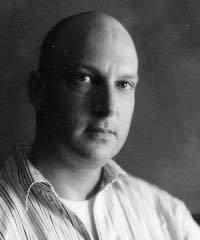
Author

Richard Siken
Richard Siken

Richard Siken is an American poet born in 1967. His poetry is known for its unique style and profound emotional expression, which has won him a wide audience. more

You May Also Like

“I don't pay much attention to the distinction between fantasy and science fiction–or between “genre” and “mainstream” for that matter. For me, all fiction is about prizing the logic of metaphors-which is the logic of narratives in general–over reality, which is irreducibly random and senseless. We spend our entire lives trying to tell stories about ourselves–they’re the essence of memory. It is how we make living in this unfeeling accidental universe tolerable. That we call such a tendency “the narrative fallacy” doesn’t mean it doesn’t also touch upon some aspect of the truth. Some stories simply literalize their metaphors a bit more explicitly.”

“Experience cannot beat logic, and interpretations of observational evidence which are not in line with the laws of logical reasoning are no refutation of these but the sign of a muddled mind (or would one accept someone’s observational report that he had seen a bird that was red and non-red all over at the same time as a refutation of the law of contradiction rather than the pronouncement of an idiot?).”

“Someone. Everyone. Anyone. No-one. One. One can't be everyone, but there isn't more than one everyone, at the same time. And at the same time no-one can't be someone, but anyone can be one, and also anyone can be a no-one. To sum up - everyone is someone, and any-one becomes a no-one if you divide the one part long enough by every part of every-one, so in conclusion, I have no idea what I’m talking about, basically.”

“Poetry is seeing everything when there is only one thing. It is looking at a rose but seeing the stars, moons, seas, and trees. It is a truth beyond logic, an experience beyond thought. Poetry is the Earth pausing on its axis in order to manifest itself as a rose.”

“[Asked by an audience member at a public Q&A session] Considering that atheism cannot possibly have any sense of 'absolute morality', would it not then be an irrational leap of faith – which atheists themselves so harshly condemn – for an atheist to decide between right and wrong? [Dawkins] Absolute morality...the absolute morality that a religious person might profess would include, what, stoning people for adultery? Death for apostasy? [...] These are all things which are religiously-based absolute moralities. I don't think I want an absolute morality; I think I want a morality that is thought out, reasoned, argued, discussed, and based on – you could almost say intelligent design. [...] If you actually look at the moralities that are accepted among modern people – among 21st century people – we don't believe in slavery anymore; we believe in equality of women; we believe in being gentle; we believe in being kind to animals...these are all things which are entirely recent. They have very little basis in Biblical or Koranic scripture. They are things that have developed over historical time; through a consensus of reasoning, sober discussion, argument, legal theory, political and moral philosophy. These do not come from religion. To the extent that you can find the 'good bits' in religious scriptures, you have to cherry-pick. You search your way through the Bible or the Koran, and you find the occasional verse that is an acceptable profession of morality – and you say, look at that! That's religion!...and you leave out all the horrible bits. And you say, 'Oh, we don't believe that anymore, we've grown out of that.' Well, of course we've grown out of it. We've grown out of it because of secular moral philosophy and rational discussion.”