“Pendant des millions d'années, l'humanité a vécu comme les animaux. Par la suite, quelque chose est arrivé qui a libéré le pouvoir de notre imagination. Nous avons appris à parler et à écouter. La parole a permis la communication des idées, abilitant l'être humain à travailler ensemble afin de construire l'impossible. Les plus grandes réalisations de l'humanité se sont matérialisées en parlant, et ses plus grands échecs en ne parlant plus. Cela n'a pas lieu d'être. Nos plus grands espoirs pourraient devenir des réalités dans le futur. Avec la technologie à notre disposition, les possibilités sont illimitées. Tout ce que nous avons à faire est de s'assurer que nous continuions à parler.”
Quote by Stephen Hawking
Author
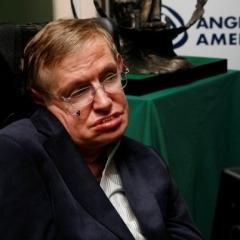
Stephen Hawking
Stephen Hawking was a renowned British theoretical physicist known for his contributions to the fields of black hole theory and cosmology. Born on January 8, 1942, he overcame the challenges of ALS to become a global icon of science and perseverance. more
You May Also Like
Source: The Intelligence of Evil or the Lucidity Pact
Source: The Waters
Source: Il cavaliere inesistente
Source: Il cavaliere inesistente
“Wojna to trochę rzeźnia, a trochę rutyna i nie ma co czepiać się zanadto szczegółów.”
Source: Il cavaliere inesistente
Source: Il cavaliere inesistente
“[...] a życie to tylko tarzanie się między łóżkiem a trumną [...]”
Source: Il cavaliere inesistente
“I ja także chcę tylko jednego: być kimś, kto wie, czego chce!”
Source: Il cavaliere inesistente
Source: Il cavaliere inesistente