Quotessence
Home / Quotes / Quote by Graham Hancock

Quote by Graham Hancock

“The same solution--that Easter Island was once part of a much larger landmass--would also explain another, very different puzzle, namely the so-called Rongo Rongo script. It is unprecedented in human history for a sophisticated fully developed writing system to be invented and put into use by a small, isolated island community. Yet Easter Island does have its own script, examples of which, mostly incised on wooden boards, copies of copies of copies of much older lost originals, were collected in the nineteenth century and have found their way into a number of museums around the world. None remain on Easter Island itself and even in the period when they were collected no native Easter Islanders were able to read them.”

Quote by Graham Hancock

Work

Author

Graham Hancock
Graham Hancock

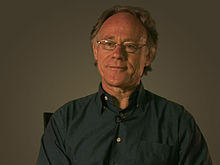
Graham Hancock is a British writer known for his research into ancient civilizations and mysterious phenomena. His works delve into the mysteries of human history and culture, including ancient Egypt, the Maya, and Atlantis. more

You May Also Like

“The Sanskrit texts make it clear that a cataclysm on this scale, though a relatively rare event, is expected to wash away all traces of the former world and that the slate will be wiped clean again for the new age of the earth to begin. In order to ensure that the Vedas can be repromulgated for future mankind after each pralaya the gods have therefore designed an institution to preserve them -- the institution of the Seven Sages, a brotherhood of adepts possessed of unerring memories and supernatural powers, practitioners of yoga, performers of the ancient rituals and sacrifices, ascetics, spiritual visionaries, vigilant in the battle against evil, great teachers, knowledgeable beyond all imagining, who reincarnate from age to age as the guides of civilization and the guardians of cosmic justice.”

“Another extraordinary similarity concerns the presence of Seven Sages in both the Sumerian and Vedic traditions. Most ancient societies, I concede, had their sages or seers or wise men -- in India they were, and still are, called rishis. But it seems to me to be stretching coincidence too far to find a group specifically named the 'Seven Sages' prominently associated with two separate ancient cultures and to imagine that this did not come about through some sort of connection. In the case of Sumer the Seven Sages were depicted as amphibian, 'fish-garbed' beings who emerged from the sea in antediluvian times to teach wisdom to mankind. In the case of the Vedas the focus is not on the antediluvian period but on the flood itself and those antediluvians who are claimed to have survived it, namely Manu and the Seven Sages.”

“Although our countries have been changed by the hegemonizing influences of both Iran and Saudi Arabia, the headlines in the Western media have always reduced matters of extraordinary depth and complexity to a mere snapshot, which more often than not has catered to an orientalist audience that regards Arab or Muslim cultures as backward and to security-focused policymakers. Over time those two groups have worked to reinforce each other, merging to such an extent that everything was viewed through the prism of the security of the West, especially after 9/11.”

“In an editorial headlined “The King Is Dead,” The New York Times noted, “Even among the hierarchy of great motion-picture stars, of whom there were many in the happy years of his ascendance, he was acknowledged supreme. Perhaps he was not the most skillful and subtle in the way of technique. Perhaps he did not possess the polish of some of the latterly imported British stars. But what Gable had in a measure that no other star quite matched—or projected as ferociously as he did—was a true masculine personality. Whatever the role, Gable was as certain as the sunrise. He was consistently and stubbornly all Man….People everywhere—men, women and small boys—admired Clark Gable. He was a conspicuous symbol of the rugged American throughout the world.”