Quotessence
Home / Quotes / Quote by Nathaniel Branden

Quote by Nathaniel Branden

“To think, to judge, to choose our values is to be individuated, to create a distinct, personal identity. But thus to affirm that I exist is to open myself to the realization that I am finite, that my life is limited, that I am mortal, that one day I will die. The rebellion against the inevitability of death results in a rebellion against the challenges and opportunities of life. If I refuse to fully live, I cannot die. So: fear of autonomy entails fear of self-responsibility entails fear of identity entails fear of aloneness entails fear of death. That which does not exist cannot perish.”

Quote by Nathaniel Branden

Work

Honoring the Self: Self-Esteem and Personal Transformation

Browse quotes and source details for this work. more

Author
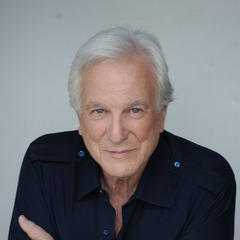
Nathaniel Branden
Nathaniel Branden

Nathaniel Branden was a renowned psychotherapist and author, best known for his contributions to the fields of personal growth and self-actualization. His work has had a profound impact on modern psychology, particularly in the areas of self-psychology and emotional intelligence. more

You May Also Like

“Consensus, while comforting and harmonious as well as efficient, often leads us to make bad decisions. Dissent, while often annoying, is precisely the challenge that we need to reassess our own views and make better choices. It helps us consider alternatives and generate creative solutions. Dissent is a liberator. So why do we punish dissent? Most of us believe that we are open to differing views. Some of us believe that we like challenges to our ideas. In practice, however, most of us dislike a person who believes the opposite of a position we hold, and we creatively look for reasons for his “error.” We tend to think of him in negative terms. He is a troublemaker who is wasting time and blocking our goals. We are quite willing to punish him, most often through ridicule or rejection. We are continually advised “to go along and to get along.” It is powerful advice for most of us who prefer to be “in” rather than “out.” We like being accepted and valued—and we know that if we stand up against the majority, we will be “on the outs.” We thus remain silent. Sometimes we even nod in agreement, not knowing why we are nodding—because we choose not to ask ourselves what we really believe. There is a price for this as well.”

“But freedom from an interfering state is no guarantee of individual autonomy; something more is needed for that. Genuine autonomy demands that we act deliberately, that our beliefs, values, and decisions are really are own, and this means that we need to have a handle on the reasons that shape our behaviour. But this is no easy task. Our reasons for acting are not always transparent, even to us. Self-knowledge is not a given, but it is not out of reach, either. It is something that we can work at, and with understanding comes options. Knowing why we behave the way we do can help us to see choices where we previously saw none.”

“.... freedom from an interfering government is not the only barrier to genuine autonomy. The right to reflect is not universal. It is a privilege afforded to those of us in affluent societies who have time to spare, and who are not otherwise burdened by fundamental problems, like poverty, malnutrition or ill health, problems that, at least in male-dominated societies, women suffer disproportionately. Add to this women’s lack of equality under the law in those same societies, as well as their lack of equal access to education and basic social institutions of welfare, and it becomes clear that it is not just women’s bodies but their basic human rights that are under attack in male-dominated societies.”

“The current system for refugees who remain in their region of origin is a disaster. It is premised upon an almost exclusively 'humanitarian' response. A system designed for the emergency phase - to offer an immediate lifeline - ends up enduring year after year, sometimes decade after decade. External provision of food, clothing, and shelter is absolutely essential in the aftermath of having to run for your life. But over time, if it is provided as a substitute for access to jobs, education, and other opportunities, humanitarian aid soon undermines human dignity and autonomy.”

“For the period that refugees are in limbo, we should be creating an enabling environment that nurtures rather than debilitates people's ability to contribute in exile and when they ultimately go home. This should involve all of the things that allow people to thrive and contribute rather than merely survive: education, the right to work, electricity, connectivity, transportation, access to capital.”