Quotessence
Home / Quotes / Quote by David Daiches

Quote by David Daiches

“Historically, the language we call Scots was a development of the Anglian speech of the Northumbrians who established their kingdom of Bernicia as far north as the Firth of Forth in the seventh century. This northern Anglo-Saxon language flourished in Lowland Scotland and emerged into a distinct language on its own, capable of rich expansion by borrowing from Latin, French and other sources with its own grammatical forms and methods of borrowing. By the time of the Makars of the fifteenth century it was a highly sophisticated poetic language, based on the spoken speech of the people, but enriched by many kinds of expansion, invention and 'aureation'. Distinct from literary English, but having much in common with it, literary Scots took its place in the late Middle Ages as one of the great literary languages of Europe.”

Quote by David Daiches

Work

Literature and Gentility in Scotland

Browse quotes and source details for this work. more

Author
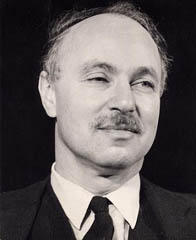
David Daiches
David Daiches

David Daiches was a renowned British historian known for his in-depth research into British literature and culture. His work covered British literature from the Middle Ages to the modern era, particularly focusing on the relationship between literature and its social and historical context. more

You May Also Like

“THE PUDDOCK A puddock sat by the lochan's brim, An he thought there was never a puddock like him. he sat on his hurdies, he waggled his legs, An cockit his heid as he glowered through the seggs. The biggsy wee cratur was feelin that prood, He gapit his mou an he croakit oot lood: 'Gin ye'd a like tae see a richt puddock,' quo he, 'Ye'll never, I'll sweer, get a better nor me. I've femlies an wives an a weel-plenished hame, Wi drink for my thrapple an meat for my wame. The lasses aye thocht me a fine strappin chiel, An I ken I'm a rale bonny singer as weel. I'm nae gaun tae blaw, but th' truth I maun tell - I believe I'm the verra McPuddock himsel.'... A heron was hungry an needin tae sup, Sae he nabbit th' puddock an gollupt him up; Syne runkled his feathers: 'A peer thing,' quo he, 'But - puddocks is nae fat they eesed tae be.”

“When I left home, I faithfully carried my copy of Sunset Song onward into life. Each reading brought a new layer and deeper understanding, but it was the notion of Two Chrisses that always echoed in my soul. Through Chris Guthrie, I understood the inferiority complex I felt as a working-class Scot as I began to move in different circles. I remember arriving at drama school with Doric words in my mouth, as other students looked blankly at my attempts to find an English equivalent. I'd then return home and feel 'posh' amongst my Scots speaking family. I was part of two worlds, but felt like I belonged in neither. The feeling persistently lingered but surfaced in earnest during the pandemic. At that time, I was working with the Scots Language Centre on their 'Scots Wark' project, and I was asked to deliver a creative learning resource. My offering was called 'The Twa Chrisses: A Love Letter to Sunset Song', a cathartic and empowering story to scrieve, but it also made my fingers itch to write a full theatrical adaptation. Somehow, gorgeous synchronicity ensued when Andrew Panton, Artistic Director of Dundee Rep, and Finn den Hertog contacted me with this very idea.”

“Ye ken, man laird, while I just dive richt to the bottom o a linn, and set doon there; ye'd think it was the inside o the Fairy Hill. Trooties, ye ken, and saumon, and they awfu pike, a comin round ye, and they bits o water weeds, waggin aboot like lairch trees in the blast. I mind ae time I stoppit doon nigh aboot half an hour. Maybe no just sae much, ye ken, but time gaes awfu quick when ye're at the bottom o a linn.”

“Win Ower hill an brae He comes tae play, The rantin roarin Win; He cowps the trees An lachs tae hear the din, He sweels the spate The deil's ain gate Oot ower the feckless banks. An Tilly's stooks Furl roon like deuks Wi panic i the ranks! Wi jaggit shears The duds he tears Aff lines she filled sae croose, An reek an flaws Doon lums he ca's A' steerin throwe the hoose. Ower yard an closs. A sair-like loss He spreads o hay an strae; The hens he blaws Like feather ba's Tae gie his humour play. An neist he's aff Tae tig an daff Wi' quinies fae the skweel; Like sails o ships He fulls their slips - Syne dooks them i the peel! Ower hill an brae He comes tae play, The rantin roarin Win; An grannies tell His pooers sae fell, An dra their airmchairs in.”

“Wee Wullie Waggletail, what is a' your stishie? Tak a doup o' water and courie on a stane: Ilka tree stands dozent, an' the wind without a hishie Fitters in atween the fleurs and shogs them, ane be ane. What whigmaleerie gars ye jow and jink amanf the duckies, Wi' a rowsan simmer sin beekin on your croun; Wheeple, wheeple, wheeplin like a wee burn owre the chuckies, An wagglin here, an wagglin there, an wagglin up an' doun.”