Quotessence
Home / Quotes / Quote by Anne Morrow Lindbergh

Quote by Anne Morrow Lindbergh

“And then, some morning in the second week, the mind wakes, comes to life again. Not in a city sense—no—but beach-wise. It begins to drift, to play, to turn over in gentle careless rolls like those lazy waves on the beach. One never knows what chance treasures these easy unconscious rollers may toss up, on the smooth white sand of the conscious mind; what perfectly rounded stone, what rare shell from the ocean floor. Perhaps a channeled whelk, a moon shell, or even an argonaut.”

Quote by Anne Morrow Lindbergh

Work

GIFT FROM THE SEA

This novel delves into the introspective experiences of a woman who finds solace and revelation while spending time by the sea. It is a reflective piece that touches upon themes of solitude, nature, and the human spirit. more

Author

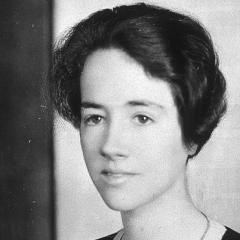
Anne Morrow Lindbergh

Anne Morrow Lindbergh was an accomplished American author known for her profound personal experiences and elegant literary style. Born on June 22, 1906, and passing away on February 7, 2001, she was not only Charles Lindbergh's wife but also an independent writer and thinker. Her writing career began in the 1930s, with works spanning novels, poetry, and prose. Her first book, 'We Are the Ship,' is a memoir about her life with her husband. Despite the challenges in her marriage, she remained passionate about life and writing. Her other notable works include 'Gift from the Sea' and 'The Aviator's Wife,' which delve into themes of female identity, marriage, and the deeper questions of human existence. Lindbergh's writing has been praised for its insightful observations and beautiful language. Her works have had a wide-reaching impact both in the United States and internationally, influencing subsequent writers and considered an important figure in 20th-century American literature. more
You May Also Like

“What codependency feels like at first: “You complete me!” or “I will be your hero!” What codependency feels like later on: watching in horror as someone else’s life passes before your eyes; wondering in utter bewilderment where your own life went. The final destination of codependency: rage, emptiness, loneliness, despair. The anthem of the exhausted codependent: “After all I’ve done for you!”

“I noticed chartreuse lichen scabbing the rocks, the lick and suck of tide against sea-smoothed stones, how every single one of the shells in the bay was different; white limpet shells and ear-shaped mussel shells; kelp fronds, the ones like bronze ribbons, and cream ones like bandages, their stems like bone joints; and, of course, the ocean, that perpetual shapeshifter: one day a disc of hammered gold, the next wild and rearing, like a thousand white horses. I noticed how the ocean had moods, just like a person.”

“Now in her hands, the final copy- every brushstroke, every carefully thought-out color, every word of the natural histories, printed in a book. There were also drawings of the creatures who live inside- how they eat, how they move, how they mate- because people forget about creatures who live in shells. She touched the pages and remembered each shell and the story of finding it, where it lay on the beach, the season, the sunrise. A family album.”