“What is it, what nameless, inscrutable, unearthly thing is it; what cozening, hidden lord and master, and cruel, remorseless emperor commands me; that against all natural lovings and longings, I so keep pushing, and crowding, and jamming myself on all the time; recklessly making me ready to do what in my own proper, natural heart, I durst not so much as dare? Is Ahab, Ahab? Is it I, God, or who, that lifts this arm? But if the great sun move not of himself; but is as an errand-boy in heaven; nor one single star can revolve, but by some invisible power; how then can this one small heart beat; this one small brain think thoughts; unless God does that beating, does that thinking, does that living, and not I. By heaven, man, we are turned round and round in this world, like yonder windlass, and Fate is the handspike. And all the time, lo! that smiling sky, and this unsounded sea! Look! see yon Albicore! who put it into him to chase and fang that flying-fish? Where do murderers go, man! Who's to doom, when the judge himself is dragged to the bar? But it is a mild, mild wind, and a mild looking sky; and the air smells now, as if it blew from a far-away meadow; they have been making hay somewhere under the slopes of the Andes, Starbuck, and the mowers are sleeping among the new-mown hay. Sleeping? Aye, toil we how we may, we all sleep at last on the field. Sleep? Aye, and rust amid greenness; as last year's scythes flung down, and left in the half-cut swaths--Starbuck!" But blanched to a corpse's hue with despair, the Mate had stolen away. Ahab crossed the deck to gaze over on the other side; but started at two reflected, fixed eyes in the water there. Fedallah was motionlessly leaning over the same rail.”
Quote by Herman Melville
Work
Moby-Dick is a profound and complex novel by Herman Melville, published in 1851. The story revolves around the crew of the Pequod, a whaling ship, and their quest to hunt the elusive white whale, Moby Dick. The novel explores themes of revenge, the nature of evil, and the struggle between man and the natural world. It is renowned for its rich prose, philosophical musings, and its place in American literature. more
Author
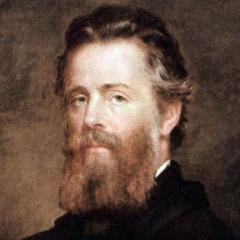
Herman Melville was a renowned 19th-century American novelist known for his profound psychological descriptions and unique literary style. His masterpiece, 'Moby-Dick', is considered a classic of American literature. more
You May Also Like
“J'admets la part de l'autre dans la constitution de mon destin.”
“Prince, pardon me, or strike me, if you please. I cannot be much lower than my knees.”
“Er…dreeing your weird means ‘facing your fate,’” said the toad.”