Quotessence
Home / Quotes / Quote by Russell Hoban

Quote by Russell Hoban

“I said, 'Yes theres a lot to look a head to. Like croaking iron at Widders Dump. We do the croaking and they get the iron.' He said, 'Riddley theres other things to do as wel.' I said, 'Yes and they all smel of cow shit dont they?”

Quote by Russell Hoban

Work

Riddley Walker

Riddley Walker is a narrative that delves into a future where the world has been ravaged by a great war, leaving humanity in a primitive state. The story is narrated by Riddley, a young boy who communicates through a limited vocabulary and a unique dialect. The novel examines the loss of language and the struggle for meaning in a world where technology and civilization have collapsed. It is a thought-provoking exploration of the human condition and the resilience of the human spirit. more

Author

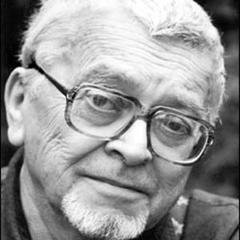
Russell Hoban
Russell Hoban

Russell Hoban was a renowned writer known for his unique literary style and contributions to children's literature. His works spanned various genres, including novels, poetry, and plays. Hoban's career began in the 1950s, and his works gained widespread recognition in the literary world and among readers. more

You May Also Like

“Human beings do not like to look squarely into the face of tragedy. Gloom is unpopular and we prefer the “out of sight, out of mind” escape. But there comes a time when issues must be recognized as issues — and resolved. The democratic way of life is at stake. You cannot meet today’s crisis tomorrow. You cannot pick and choose when and what you will do at your personal convenience. You cannot dawdle with history. We must face the bitter fact that we have forsaken our great dream of a life of, for, and by the people; that the burning passions and ideals of the American dream lie congealed by cold cynicism. Great parts of the masses of our people no longer believe that they have a voice or a hand in shaping the destiny of this nation. They have not forsaken democracy because of any desire or positive action of their own; they have been driven down into the depths of a great despair born of frustration, hopelessness, and apathy. A democracy lacking in popular participation dies of paralysis.”

“Hesse wrote an essay on what he saw as the world's publishing crisis and the fate of the book. Hesse concluded his talk with these words: 'Only a few sacred books that humankind treasures hold the regenerating power and survive throughout the millennia and the world crises. It is reassuring to see that the situation does not depend on the distribution of these works. It is not necessary for millions, even hundreds of thousands of readers to have appropriated for themselves this or that sacred book. It is enough that a few people should have been touched by them.”