Quotessence
Home / Quotes / Quote by Robin Williams

Quote by Robin Williams

“I used to think the worst thing in life is to end up all alone. It's not. The worst thing in life is to end up with people who make you feel all alone.”

Quote by Robin Williams

Author
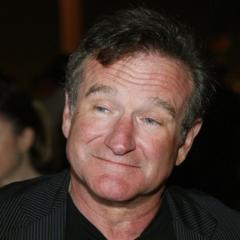
Robin Williams
Robin Williams

Robin Williams was an American actor, comedian, writer, and producer. Known for his unique sense of humor and acting skills, he won multiple awards, including the Academy Award for Best Actor. Williams' career spanned film, television, and stage performances, with some of his most famous roles including John Keating in 'Dead Poets Society' and Stuart Little in 'Stuart Little'. more

You May Also Like

“Abby began to think that all the beauty and ugliness and turbulence one found scattered through nature, one could also find in people themselves, all collected there, all together in a single place. No matter what terror or loveliness the earth could produce- wind, seas- a person could produce the same, lived with the same, lived with all that mixed-up nature swirling inside, every bit. There was nothing as complex in the world- no flower or stone- as a single hello from a human being.”

“اللهم قنى شر الحرص و الحذر و الحيطة,و أحينى طفلاً شجاعاً و أمتنى طفلاً شجاعاً.اللهم إنى لا أريد أن أكون محنكاً أبداً. أريد لقلبى أن ينفجر و هو يقول ما فيه,و لا أريده أن يموت مطوياً على سره. هذه حياتى و لست أملك حياة غيرها.”

“Years ago I recognized my kinship with all living things, and I made up my mind that I was not one bit better than the meanest on the earth. I said then and I say now, that while there is a lower class, I am in it; while there is a criminal element, I am of it; while there is a soul in prison, I am not free.”

“When I applied to graduate school many years ago, I wrote an essay expressing my puzzlement at how a country that could put a man on the moon could still have people sleeping on the streets. Part of that problem is political will; we could take a lot of people off the streets tomorrow if we made it a national priority. But I have also come to realize that NASA had it easy. Rockets conform to the unchanging laws of physics. We know where the moon will be at a given time; we know precisely how fast a spacecraft will enter or exist the earth's orbit. If we get the equations right, the rocket will land where it is supposed to--always. Human beings are more complex than that. A recovering drug addict does not behave as predictably as a rocket in orbit. We don't have a formula for persuading a sixteen-year-old not to drop out of school. But we do have a powerful tool: We know that people seek to make themselves better off, however they may define that. Our best hope for improving the human condition is to understand why we act the way we do and then plan accordingly. Programs, organizations, and systems work better when they get the incentives right. It is like rowing downstream.”

“We are, on earth, two distinct races. Those who have need of others, whom others amuse, engage soothe, whom solitude harasses, pains, stupefies, like the movement of a terrible glacier or the traversing of the desert; and those, on the contrary, whom others weary, tire, bore, silently torture, whom isolation calms and bathes in the repose of independency, and plunges into the humors of their own thoughts. In fine, there is here a normal, physical phenomenon. Some are constituted to live a life outside of themselves, others, to live a life within themselves. As for me, my exterior associations are abruptly and painfully short-lived, and, as they reach their limits, I experience in my whole body and in my whole intelligence an intolerable uneasiness.”